Skip to content
Save up to 80%
Actonel
Active ingredient: Risedronate

Actonel

Quality products
24/7 Support
Fast delivery
Delivery from 4 days
Select pack Package Per tablet Price

Free delivery on orders from £ 200.00, free express delivery from £ 300.00

Secure Payments
Track your order
Best price guarantee

Risedronate in Actonel slows the bone-remodelling process that removes old bone, helping preserve skeletal strength. It is intended for adults with osteoporosis, including postmenopausal and glucocorticoid-induced bone loss. Reduced bone resorption can lower the risk of vertebral and other fragility fractures when treatment is used correctly.

About this product

Actonel is a prescription-only oral bisphosphonate containing risedronate sodium. It is used to treat osteoporosis and reduce fracture risk by limiting excessive bone breakdown.

Uses

Risedronate is also used in selected patients with glucocorticoid-induced osteoporosis, where long-term steroid treatment accelerates bone loss. The clinical indication and regimen depend on the patient’s fracture risk, bone mineral density, age, kidney function, and other medicines [1].

Primary therapeutic indications

Treatment may be considered for:

  • Postmenopausal osteoporosis.
  • Osteoporosis in men where bisphosphonate treatment is appropriate.
  • Glucocorticoid-induced osteoporosis or increased fracture risk associated with prolonged corticosteroid therapy.
  • Bone loss accompanied by a high risk of vertebral, hip, wrist, or other fragility fractures.

Bone mineral density is commonly assessed with dual-energy X-ray absorptiometry, known as a DXA or DEXA scan. A clinician may also consider previous fractures, steroid exposure, family history, age, falls, and other risk factors. A scan result alone does not determine whether Actonel is suitable.

Tell the prescriber if you have difficulty swallowing tablets, severe heartburn, an oesophageal condition, or previous dental surgery. These details can affect the choice and timing of bisphosphonate treatment.

A practical point is easy to miss: Actonel is designed to support long-term fracture prevention, not to relieve sudden bone or joint pain. The absence of pain does not show whether osteoporosis treatment is working.

Pharmacological action

Risedronate sodium belongs to the nitrogen-containing bisphosphonate group. Bone contains a mineral structure called hydroxyapatite, and risedronate has a strong affinity for this mineral. It becomes concentrated on areas where bone is being actively remodelled.

Osteoclasts are cells that remove old bone. After an osteoclast attaches to a risedronate-treated bone surface, it takes up the drug during the resorption process. Risedronate then interferes with enzymes in the mevalonate pathway. This pathway helps osteoclasts produce proteins required for cell attachment, signalling, and survival. Disruption reduces osteoclast activity and can lead to osteoclast cell death, slowing bone resorption [2].

In plain terms, Actonel does not create new bone directly. It reduces the rate at which existing bone is removed, giving bone-forming activity more opportunity to maintain or improve skeletal structure. This explains why treatment is measured over months rather than days.

The mechanism also explains why the tablet must reach the stomach and intestine without being taken alongside minerals. Calcium and other polyvalent cations can bind risedronate in the digestive tract, reducing the amount available for absorption.

When not to use it

  • Uncorrected hypocalcaemia, meaning a low blood calcium level that has not been corrected.
  • Oesophageal abnormalities that delay emptying, including some strictures or achalasia.
  • Inability to remain upright for at least 30 minutes after taking the tablet.
  • Severe renal impairment where risedronate is unsuitable.
  • Previous serious hypersensitivity to risedronate or an excipient in the formulation.
  • Conditions that make reliable oral administration impossible.

Calcium supplements, antacids, iron, magnesium, aluminium, and other polyvalent cations can bind risedronate in the gut. This chelation reduces absorption. These products need to be taken at a separate time according to the prescribed plan. Food also reduces absorption when taken too close to the tablet.

Tell the prescriber about corticosteroids, medicines for reflux, mineral supplements, dental treatment, kidney disease, and previous low calcium levels. Corticosteroids can increase fracture risk, while dental and oral-health factors matter because bisphosphonates have a rare association with osteonecrosis of the jaw.

Do not take Actonel together with a calcium tablet, antacid, iron product, or magnesium supplement. The issue is chemical binding in the gut, not simply stomach fullness.

Pregnancy and breastfeeding require a separate risk assessment. Risedronate is generally not used routinely in pregnancy, and anyone who becomes pregnant during treatment should contact the prescribing team promptly.

When this is not for you

Actonel is not suitable for everyone. NOT for you if you cannot remain upright for 30 minutes, have uncorrected hypocalcaemia, or have an oesophageal condition that delays emptying; ask a prescriber about alternatives.

Adverse reactions

The most familiar adverse effects involve the upper digestive tract. Possible reactions include indigestion, abdominal discomfort, nausea, diarrhoea, constipation, headache, musculoskeletal pain, and irritation of the oesophagus. Taking the tablet with insufficient water, taking it close to food, or lying down soon afterwards can increase upper gastrointestinal problems.

Stop taking the medicine and obtain urgent medical assessment for:

  • New or worsening difficulty swallowing.
  • Pain on swallowing.
  • Chest pain or severe heartburn.
  • Swelling of the face, lips, tongue, or throat.
  • Breathing difficulty.
  • A new rash with blistering or widespread skin peeling.
  • Severe thigh, hip, or groin pain that may indicate an unusual femoral fracture.

Bisphosphonate use can rarely cause osteonecrosis of the jaw, especially in people receiving intensive treatment, those with cancer, or patients exposed to corticosteroids. Poor oral health, gum infection, invasive dental procedures, and smoking may increase concern. A dental examination and routine preventive care can be useful before prolonged treatment, especially when invasive dental work is anticipated.

Atypical femoral fractures are also rare. Warning pain may occur in the thigh, hip, or groin before a fracture. Persistent symptoms should be reported rather than dismissed as ordinary muscular discomfort.

The MHRA Yellow Card scheme collects reports of suspected adverse reactions from patients and healthcare professionals. It supports pharmacovigilance, which means monitoring medicine safety after authorisation [5].

Jaw pain, loose teeth, gum swelling, or a sore that does not heal deserves prompt dental assessment during bisphosphonate treatment. Do not wait for a routine appointment if symptoms are progressing.

Another practical detail concerns thigh pain. A dull ache on one side may appear before a rare atypical femoral fracture, so persistent or unexplained pain should be reported even when there has been no fall.

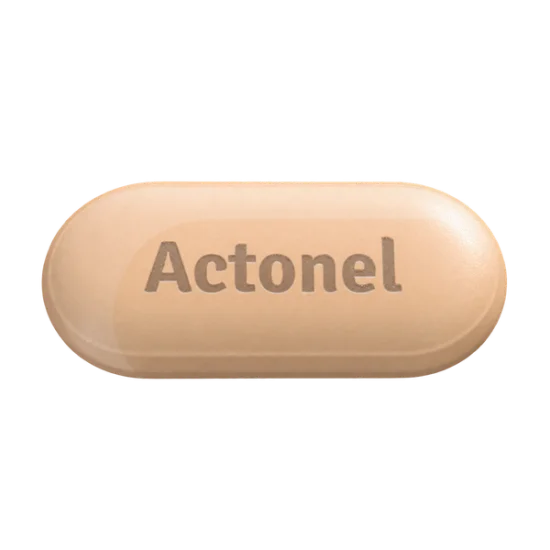
What it contains

Actonel contains risedronate sodium, an oral bisphosphonate used to limit excessive bone breakdown. It is supplied as tablets, and the prescribed amount per intake is set individually according to the treatment plan. Risedronate may be prescribed on a daily or once-weekly schedule.

Dosage and administration

Actonel is supplied as oral tablets. Risedronate treatment may follow a daily or once-weekly schedule, depending on the prescribed formulation and the individual treatment plan. The amount per intake is set for each person by the prescriber.

  • Take the tablet in the morning, before the first food, drink, or medicine of the day.
  • Swallow it whole with a full glass of plain water.
  • Remain sitting or standing for at least 30 minutes after taking it.
  • Do not chew, suck, or crush the tablet.
  • Keep calcium supplements, antacids, iron, magnesium, and other mineral products separate from the dose.
  • Follow the prescribed daily or weekly schedule rather than changing between schedules independently.
  • If a dose is missed, use the specific missed-dose instructions for the prescribed regimen. Do not take two doses together unless a prescriber has expressly instructed this.

Plain water matters. Coffee, tea, juice, and mineral water may interfere with absorption or irritate the upper digestive tract. Taking Actonel while lying down increases the risk of oesophageal irritation.

Regimen Administration principle Main adherence issue
Daily risedronate Taken before food and other oral products on each scheduled day A regular morning routine reduces missed doses
Once-weekly risedronate Taken on the same chosen weekday, following the prescribed timing rules The weekly day must be remembered accurately
Individualised prescription Amount and duration selected according to clinical factors Do not alter the schedule without medical direction

The treatment course may last many months or longer. The prescriber reviews fracture risk, tolerance, kidney function, calcium status, new fractures, and the continuing need for therapy. A planned treatment pause may be considered for some patients after a period of treatment, but it is not appropriate for everyone.

A useful routine is to take the tablet immediately after getting out of bed, before breakfast or other morning medicines. Keep calcium and iron for a later time of day if they are prescribed.

Patients sometimes place the tablet beside breakfast items but then swallow it with coffee. That small change can reduce absorption and does not follow the intended administration method.

Comparison

Bisphosphonates share the purpose of reducing bone resorption, yet their chemical structures, potency, dosing schedules, renal handling, and clinical evidence differ. Risedronate is a nitrogen-containing bisphosphonate. Alendronic acid is another nitrogen-containing option, while clodronic acid is a non-nitrogen bisphosphonate with a different intracellular mechanism.

Option Pharmacological profile Practical distinction
Risedronate Nitrogen-containing bisphosphonate acting through the mevalonate pathway Available in daily and once-weekly treatment approaches
Alendronic acid Nitrogen-containing bisphosphonate that also suppresses osteoclast function Oral regimens require careful fasting and upright administration
Clodronic acid Non-nitrogen bisphosphonate with a different cellular action Clinical uses and dosing arrangements differ from risedronate

Doctors may choose risedronate when its evidence base, schedule, tolerability profile, and patient factors fit the treatment plan. Alendronic acid may be selected for a different evidence or dosing context. A patient with swallowing problems may require an alternative approach, while reduced kidney function can limit the use of several bisphosphonates.

Risedronate should not be switched with alendronic acid or clodronic acid by tablet count. These medicines are not interchangeable on a dose-for-dose basis.

Common mistakes

Several practical errors can reduce the benefit of treatment:

  • Swallowing Actonel with tea, coffee, juice, or mineral water.
  • Taking calcium, iron, magnesium, or an antacid at the same time.
  • Eating breakfast immediately after the tablet.
  • Taking the tablet before returning to bed.
  • Chewing or crushing the pill.
  • Doubling the next dose after a missed dose.
  • Stopping treatment after a few weeks because osteoporosis has no symptoms.
  • Ignoring new swallowing difficulty, chest discomfort, jaw symptoms, or thigh pain.
  • Failing to mention dental extraction or implant plans.
  • Assuming a once-weekly schedule can be changed to daily use without a new prescription.

A missed dose should be handled according to the prescribed regimen. The correct action differs between daily and weekly schedules, so taking two tablets together is unsafe unless specifically directed.

What doctors say

In clinical practice, prescribers usually explain that Actonel lowers fracture risk gradually and works best when the tablet is taken correctly. Bone mineral density may remain stable rather than rising dramatically, and that can still represent a useful treatment response.

Doctors also look beyond the scan. A new low-trauma fracture, worsening steroid exposure, reduced mobility, recurrent falls, or newly diagnosed kidney disease can change the treatment plan. Calcium and vitamin D status may be assessed, but calcium supplements must be timed away from risedronate.

A common clinical observation is that administration errors cause more avoidable problems than patients expect. Taking the tablet with coffee, breakfast, or an antacid can reduce absorption. Taking it before lying down can aggravate oesophageal symptoms.

The prescriber may review treatment after a defined period rather than automatically continuing it indefinitely. Long-term bisphosphonate decisions balance ongoing fracture risk against rare complications, previous fractures, age, bone density, steroid use, and treatment tolerance.

Questions and answers

Can Actonel cause heartburn or indigestion?

Actonel can cause dyspepsia, abdominal discomfort, or oesophageal irritation in some patients. The EMA's 2023 product information describes correct administration with plain water and remaining upright as important measures for reducing upper gastrointestinal exposure. Symptoms such as severe heartburn, painful swallowing, or difficulty swallowing require prompt medical assessment. Do not simply treat persistent symptoms with an antacid taken close to the risedronate dose.

What is the best time of day to take Actonel?

The usual administration time is in the morning, before food, drinks other than plain water, and other oral medicines. The MHRA's 2024 safety information for oral bisphosphonates supports taking the tablet with water and remaining upright afterwards [3]. A once-weekly regimen should be tied to one consistent weekday. The prescribed schedule takes priority over a self-selected change in timing.

Can Actonel be taken with food?

Actonel should be taken on an empty stomach because food can reduce risedronate absorption. The 2025 British National Formulary guidance used in UK clinical practice separates risedronate from breakfast, calcium, iron, magnesium, and antacid products. Swallow the tablet with plain water only. Breakfast and other morning medicines should follow the required interval for the prescribed formulation.

How long does an Actonel course last, and is long-term use acceptable?

The treatment duration is individualised according to fracture risk, bone mineral density, age, previous fractures, steroid exposure, kidney function, and tolerance. NICE guidance from 2021 describes periodic reassessment of osteoporosis treatment rather than an automatic lifelong schedule [4]. Some patients continue for several years, while others may later be considered for a monitored treatment pause. Stopping or extending treatment should follow a clinical review.

What should I do after a missed Actonel dose?

The correct action depends on whether the prescription is daily or once weekly. The EMA's 2023 product information advises against taking two tablets on the same day to compensate for a missed weekly dose. Continue with the next scheduled dose according to the prescribed instructions, unless the prescribing team gives different advice. A missed-dose plan should be clarified before treatment begins, especially when the regimen is weekly.

Do you offer anonymous delivery?

Your order will be securely packed and shipped within 24 hours. This is exactly what your package will look like (images of an actual item sent). It has the size and look of a regular private letter (24x11x0.7 cm) and its contents cannot be seen.

Actonel: What Customers Say

3.9
Based on 5 reviews
Joanne, 62 Sheffield Several months
Verified
Rating: 3.5 out of 5

I used a weekly schedule for several months. The first dose caused mild heartburn because I drank tea too soon afterwards. Moving breakfast later and using plain water made the routine easier. I still needed reminders on the correct weekday.

19 Oct 2026
Lisa, 29 Oxford
Verified
Rating: 5 out of 5

I was prescribed risedronate during steroid treatment and found the fasting instructions more demanding than expected. I kept the tablet beside a glass of water, but I did not leave it near my supplements. I had no major stomach problems after changing the timing.

24 Oct 2026
Julie, 64 Bath About half a year
Verified
Rating: 3.5 out of 5

After about half a year, my follow-up scan was stable, which my doctor considered reassuring. I disliked staying upright after taking the tablet, especially on early mornings, and missed one weekly dose. The replacement instructions prevented me from doubling it.

28 Oct 2026
Helen, 51 Hull
Verified
Rating: 3 out of 5

I developed persistent heartburn and stopped taking further tablets until I had spoken with the prescribing service. It turned out that I had been taking an antacid too close to the dose. The symptoms were taken seriously, and my treatment plan was reviewed.

1 Oct 2026
Victoria, 50 Ipswich
Verified
Rating: 4.5 out of 5

The medicine fitted into my morning routine once I separated it from calcium. I did not feel an immediate change, which was explained as normal for osteoporosis treatment. Remembering the weekly day remained the main challenge.

7 Oct 2026

Sources

  1. European Medicines Agency (2023). Actonel — Summary of Product Characteristics and Product Information.
  2. European Medicines Agency (2011). Assessment Report for Risedronate-containing medicinal products.
  3. MedicinesComplete (2025). British National Formulary: Risedronate.
  4. National Institute for Health and Care Excellence (2021). Osteoporosis: assessing the risk of fragility fracture.
  5. Medicines and Healthcare products Regulatory Agency (2024). Bisphosphonates: use and safety monitoring information.
Get our free app Shop faster and track your orders Install