Skip to content
Save up to 80%
Atrovent
Active ingredient: Ipratropium bromide

Atrovent

Quality products
24/7 Support
Fast delivery
Delivery from 4 days
Select pack Package Per tablet Price

Free delivery on orders from £ 200.00, free express delivery from £ 300.00

Secure Payments
Track your order
Best price guarantee

Adults and children prescribed anticholinergic bronchodilator therapy for obstructive airway disease may use Atrovent inhaler to improve airflow. It contains ipratropium bromide, which relaxes airway muscle and reduces cholinergic narrowing. The inhaler delivers 200 actuations for respiratory treatment.

About this product

Atrovent is a pressurised inhaler containing ipratropium bromide, an inhaled short-acting muscarinic antagonist. It is used in chronic obstructive pulmonary disease (COPD) and may be prescribed in selected asthma treatment plans when bronchoconstriction contributes to wheezing or breathlessness. Its purpose is to widen narrowed airways rather than reduce airway inflammation.

Uses

Atrovent is used most consistently in COPD, including chronic bronchitis and emphysema, where persistent cholinergic airway tone contributes to airflow limitation. It can reduce bronchospasm and may make breathing feel less restricted. The benefit is usually assessed by symptoms, physical activity, rescue-inhaler use and lung-function measurements.

Asthma is driven by variable airway inflammation and hyperresponsiveness. Ipratropium may help when bronchospasm is present, especially in acute-care protocols combined with a short-acting beta-2 agonist. It is not generally the sole long-term controller for asthma, because it does not treat the underlying inflammatory process.

Pharmacological action

The vagus nerve releases acetylcholine in the airways. This activates muscarinic receptors, causing smooth-muscle contraction and increased glandular secretion. Ipratropium interrupts that pathway, reducing reversible narrowing without directly stimulating beta receptors.

Atrovent and a beta-2 agonist work through different receptors. A clinician may use both in an acute respiratory setting, since their bronchodilator effects can be complementary.

When not to use it

Atrovent is not suitable for everyone. The main concerns involve hypersensitivity to ipratropium or atropine-like medicines, eye pressure disorders, urinary outflow problems and certain breathing reactions.

Tell the prescriber about glaucoma, prostate enlargement, bladder problems, cystic fibrosis, pregnancy and breastfeeding before treatment. Other anticholinergic medicines may increase dry mouth, constipation, blurred vision and urinary retention. The MHRA advises attention to ocular exposure and urinary complications in patients using inhaled anticholinergic bronchodilators [3].

Atrovent does not have the same interaction profile as a beta-blocker or a corticosteroid, but combined inhaled therapy still needs a deliberate prescribing plan. Avoid spraying toward the eyes, especially when using a mask with a nebuliser.

When this is not for you

This medication is not for you if

  • You have previously experienced a serious allergic reaction to ipratropium, atropine or a related anticholinergic substance.
  • You have narrow-angle glaucoma and cannot prevent the aerosol reaching your eyes.
  • You have significant urinary retention or severe bladder outflow obstruction.
  • Inhalation causes immediate worsening wheeze or a suspected paradoxical bronchospasm.
  • A clinician has identified a different cause of breathlessness requiring urgent treatment.

Adverse reactions

Common adverse effects of inhaled ipratropium include dry mouth, throat irritation, cough, headache and an unpleasant taste. These effects are often mild because the medicine is delivered locally, though sensitivity differs between patients. The UK product information identifies anticholinergic effects as the main tolerability concern [2].

Possible effects include:

  • Dry mouth or throat.
  • Hoarseness or throat irritation.
  • Cough after inhalation.
  • Headache or dizziness.
  • Palpitations.
  • Nausea or constipation.
  • Blurred vision after accidental eye exposure.
  • Difficulty passing urine in susceptible people.

A paradoxical worsening of wheeze can occur rarely after inhalation. Stop using the dose and seek urgent medical help if breathing becomes suddenly worse immediately after administration.

Eye symptoms need prompt attention. Eye pain, red eyes, halos around lights or sudden blurred vision can indicate raised intraocular pressure, especially if the aerosol reaches the eyes. People with narrow-angle glaucoma have a specific vulnerability.

Urinary retention is another practical concern. Men with prostate enlargement may notice difficulty starting urination or incomplete emptying. Severe inability to pass urine requires urgent assessment.

Dry mouth often improves with regular sips of water and sugar-free chewing gum. Persistent mouth soreness, dental problems or difficulty swallowing deserves a clinical review rather than simply increasing fluids.

What it contains

Active ingredient and pharmacological class

Ipratropium bromide blocks muscarinic acetylcholine receptors in bronchial smooth muscle. Acetylcholine normally promotes airway narrowing and mucus secretion through parasympathetic nerve pathways. By reducing this signal, ipratropium allows the bronchial muscles to relax and improves the movement of air through the lungs [1].

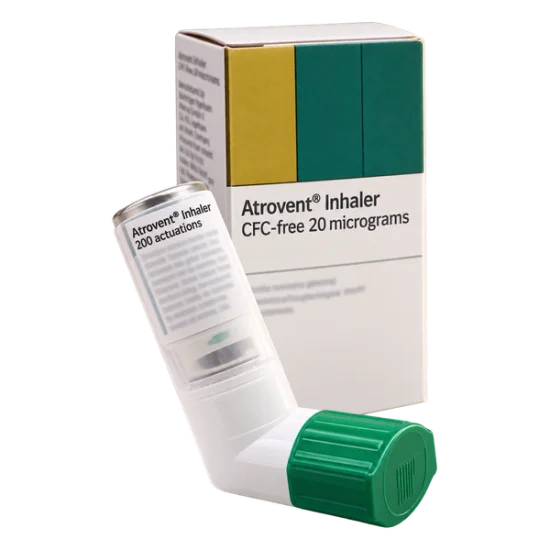
The action is mainly local within the airways, with limited systemic absorption compared with oral anticholinergic treatment. Atrovent inhaler is supplied for pulmonary administration and contains 200 actuations.

Prime and test a new inhaler according to the product instructions before relying on it during breathlessness. If the device has not been used for a prolonged period, the preparation steps may need repeating.

Dosage and administration

The required dose differs between strengths, age groups and individual treatment plans, so there is no single amount suitable for everyone. Atrovent should be used by oral inhalation at the prescribed frequency. The inhaler contains 200 actuations, and the dose should not be increased because relief seems slower than expected.

Use the device in this sequence:

  • Remove the protective cap and check that the mouthpiece is clear.
  • Hold the inhaler upright and breathe out gently, away from the mouthpiece.
  • Seal the lips around the mouthpiece.
  • Start a slow, deep breath through the mouth and release one actuation during the inhalation.
  • Continue breathing in steadily, then hold the breath briefly if comfortable.
  • Breathe out slowly.
  • If another actuation is prescribed, wait briefly and repeat the technique.
  • Replace the cap after use.

If a dose is missed, use it when remembered unless the next scheduled dose is close. In that situation, skip the missed dose and resume the normal schedule. Do not double the next administration.

A mirror can reveal a common technique problem: a visible cloud escaping around the lips means the dose is not reaching the lungs efficiently. A slower inhalation usually improves delivery.

A spacer may help some patients coordinate actuation and inhalation, though compatibility depends on the inhaler and spacer design. Children, older adults and people with arthritis may need a technique review because pressing the canister and inhaling at the same moment can be difficult.

Comparison

Atrovent belongs to the anticholinergic group. Other inhaled approaches act on different receptors or target inflammation. The choice depends on whether the main problem is cholinergic bronchoconstriction, airway inflammation, acute reversible narrowing or persistent airflow limitation.

Atrovent may be favoured in COPD when anticholinergic bronchodilation is clinically appropriate. A beta-2 agonist may be selected for rapid symptom relief. An inhaled corticosteroid addresses inflammation and has a different role from both bronchodilators.

No inhaler should be substituted by active ingredient alone. Device resistance, inhalation ability, prescribed schedule and the patient’s diagnosis all affect the practical result.

Approach Main mechanism Typical clinical role
Atrovent inhaler Muscarinic receptor blockade COPD bronchospasm and selected asthma plans
Short-acting beta-2 agonist Direct smooth-muscle relaxation through beta-2 stimulation Rapid relief of acute bronchoconstriction
Inhaled corticosteroid Suppression of airway inflammation Long-term asthma control

Common mistakes

The most frequent problems are practical rather than pharmacological:

  • Inhaling too quickly instead of taking a slow, deep breath.
  • Pressing the canister before starting to inhale.
  • Failing to breathe out before placing the mouthpiece.
  • Taking extra administrations because relief is not immediate.
  • Spraying into the eyes or using the inhaler through an ill-fitting mask.
  • Treating an asthma attack with Atrovent alone when an urgent rescue plan is required.
  • Sharing an inhaler with another person.
  • Continuing treatment without review when breathlessness is steadily worsening.
  • Confusing a missed dose with a reason to double the next dose.

Another mistake is judging the remaining supply by weight. Canisters can still feel as though they contain liquid after the metered actuations have been used. Keeping track of actuations is more reliable than shaking the device.

What doctors say

Respiratory clinicians usually judge Atrovent by functional change rather than by the sensation of a strong inhalation. A useful response may appear as easier walking, less chest tightness or fewer episodes of wheeze. Some patients notice little improvement because their symptoms are driven by inflammation rather than cholinergic bronchoconstriction.

Treatment review should include inhaler technique. A correct prescription can appear ineffective when the dose remains in the mouth or escapes during actuation. Doctors also distinguish persistent daily symptoms from sudden deterioration, since increasing an inhaler without assessment can delay treatment for infection, severe asthma or respiratory failure.

The WHO describes COPD as a chronic respiratory disease requiring an individualised combination of prevention, symptom control and monitoring. Atrovent can form part of that approach, but it does not remove the need to assess smoking exposure, vaccination status, exacerbations and lung function.

Questions and answers

What should I do after missing an Atrovent dose?

Use the missed dose when remembered unless the next scheduled dose is near. If the next dose is due soon, omit the missed administration and continue with the planned schedule. Do not double the amount, because extra anticholinergic exposure can increase dry mouth, blurred vision and urinary problems. The NHS respiratory medicines guidance and MHRA safety information support avoiding double doses after a missed inhalation in 2025.

What should I do if the expected breathing improvement does not come?

Check the inhalation technique first, then consider whether the symptoms are caused by bronchospasm. Persistent or worsening breathlessness may reflect infection, severe asthma, COPD exacerbation or another medical problem and needs prompt assessment. Sudden severe breathlessness, blue lips, confusion or inability to speak normally requires emergency help. NICE respiratory guidance published in 2025 supports structured review when symptoms remain uncontrolled despite prescribed inhaled treatment.

How soon can the effect of Atrovent become noticeable?

The bronchodilator effect can begin after inhalation, though the timing and degree of relief vary with the condition and severity of airway narrowing. Some people notice easier breathing within a short period, while others experience a more modest change that becomes clearer during activity. Atrovent is not expected to reverse every cause of breathlessness. The EMA product information published in 2019 describes ipratropium as a short-acting bronchodilator whose clinical response should be judged against the prescribed treatment plan.

Can Atrovent cause dry mouth?

Yes. Dry mouth is a recognised anticholinergic effect of ipratropium because muscarinic blockade can reduce salivary secretion. Sipping water, using sugar-free gum and maintaining oral hygiene may help mild symptoms. Severe dryness, swallowing difficulty, eye pain or urinary retention needs medical review. The MHRA safety information available in 2025 identifies these effects as clinically relevant concerns with inhaled anticholinergic medicines.

What should I discuss with a doctor before starting Atrovent?

Discuss glaucoma, prostate enlargement, urinary retention, cystic fibrosis, pregnancy, breastfeeding and any previous reaction to ipratropium or atropine-like medicines. Mention all inhaled and oral medicines with anticholinergic effects, because combined exposure can increase blurred vision, constipation or difficulty passing urine. Explain whether symptoms are episodic, exercise-related, nocturnal or progressively worsening. The British National Formulary, referenced by UK prescribers in 2025, lists these conditions as relevant to safe antimuscarinic prescribing.

What is the correct technique for using the Atrovent inhaler?

Hold the inhaler upright, breathe out away from the mouthpiece, seal your lips around it and start a slow deep breath while releasing one actuation. Continue inhaling steadily, hold the breath briefly if comfortable and then breathe out slowly. Repeat only if another actuation has been prescribed. The MHRA’s inhaler-use education materials published in 2025 and UK respiratory-care standards stress coordination, slow inhalation and prevention of eye exposure.

Do you offer anonymous delivery?

Your order will be securely packed and shipped within 24 hours. This is exactly what your package will look like (images of an actual item sent). It has the size and look of a regular private letter (24x11x0.7 cm) and its contents cannot be seen.

Atrovent: What Customers Say

3.8
Based on 3 reviews
Gary, 48 Stoke-on-Trent Several weeks
Verified
Rating: 5 out of 5

My chest felt less tight when walking to the shops, and I did not notice much taste. Dry mouth was annoying during the first week, so I kept water nearby. The improvement was useful, though it was not immediate.

29 Oct 2026
Alison, 27 Southampton Several weeks
Verified
Rating: 3 out of 5

The first few attempts were poorly coordinated, and most of the spray seemed to hit my tongue. After practising a slower breath, it felt more helpful. I still needed my usual preventer, so it was not a replacement for that.

1 Oct 2026
Mark R., 61 Coventry Several weeks
Verified
Rating: 3.5 out of 5

It reduced some wheeze, but I developed blurred vision after using it with a mask. The symptom settled after the technique was corrected, and I was advised to keep the aerosol away from my eyes. I would not increase the dose on my own.

15 Oct 2026

Sources

  1. EMA (2019). Summary of Product Characteristics (SmPC) — ipratropium bromide
  2. Electronic Medicines Compendium (2025). Atrovent inhaler — Summary of Product Characteristics
  3. MHRA (2024). Drug Safety Update — inhaled anticholinergic medicines
Get our free app Shop faster and track your orders Install