The itching eased over the next day and was mostly gone by the third day. I had mild nausea for a few hours, so I was glad I took it after breakfast.
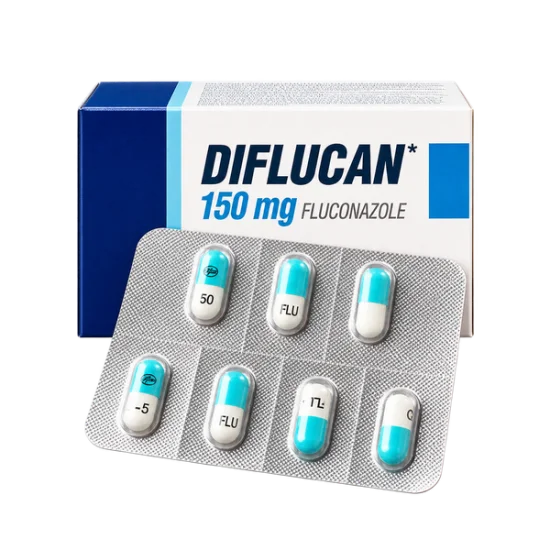
Diflucan is an oral antifungal containing fluconazole for suitable adults with diagnosed vaginal or other susceptible Candida infections. It targets fungal growth, with dosing determined according to the infection and the individual.
About this product
Patients with diagnosed vaginal or other susceptible Candida infections may be prescribed Diflucan, an oral antifungal containing fluconazole.
Uses
Thrush develops when Candida organisms multiply excessively on a mucosal surface. Candida albicans is the most frequent cause, although other Candida species can produce similar symptoms. Vaginal candidiasis may cause itching, soreness, redness, and a thick discharge; urinary discomfort can occur when inflamed tissue is exposed to urine.
Diflucan may be considered for:
- Uncomplicated vaginal thrush in suitable adults.
- Recurrent candidiasis as part of a longer clinician-directed plan.
- Oral or oropharyngeal candidiasis when the prescribed regimen is appropriate.
- Selected systemic or deeper Candida infections under specialist supervision.
- Candida infections caused by species that remain susceptible to fluconazole.
Symptoms alone do not prove that Candida is responsible. Bacterial vaginosis, sexually transmitted infections, dermatitis, allergic reactions, and some inflammatory conditions can produce overlapping symptoms. Treatment aimed at the wrong cause may delay the correct diagnosis.
Resistance also matters. Candida glabrata and some other species may respond less reliably to fluconazole than Candida albicans. Persistent symptoms after treatment need clinical review rather than automatic repeat dosing [2].
Pharmacological action
Fluconazole inhibits fungal enzymes needed to produce ergosterol, a sterol that helps maintain the fungal cell membrane. Reduced ergosterol production weakens the membrane and limits further fungal growth [1].
Fluconazole treats susceptible Candida by blocking 14-alpha-demethylase, an enzyme involved in ergosterol synthesis. This biochemical interruption damages the structure and function of the fungal cell membrane. The treatment does not act as an antibacterial, antiviral, or anti-inflammatory medicine.
When not to use it
This medication is not for you if you have had a serious allergic reaction to fluconazole or another azole antifungal. Extra caution is required with liver disease, kidney impairment, a history of abnormal heart rhythm, or known electrolyte disturbances.
- Pregnancy, especially when considering the 150 mg regimen for vaginal thrush.
- Previous severe liver reaction to an azole antifungal.
- Known QT prolongation or a history of torsades de pointes.
- Use of medicines that can produce a serious interaction.
- Repeated or unexplained genital symptoms without diagnostic confirmation.
- Suspected infection caused by a fluconazole-resistant Candida species.
Important interaction examples include warfarin, some statins, phenytoin, sulfonylureas, certain benzodiazepines, rifampicin, and medicines that influence cardiac rhythm. Fluconazole can inhibit CYP2C9, CYP2C19, and CYP3A4 enzymes, changing the concentration of several medicines. The clinical effect may include bleeding, low blood glucose, excess sedation, muscle toxicity, or rhythm disturbance.
A single 150 mg dose is not considered interchangeable with high-dose or prolonged fluconazole treatment during pregnancy. UK guidance has historically favoured topical azole treatment for vaginal thrush in pregnancy, with individual assessment determining the choice. The MHRA highlights the need to consider fetal and maternal factors when systemic fluconazole is prescribed [4].
When this is not for you
Do not use Diflucan without an individual prescribing decision if you are pregnant, have liver or kidney problems, have experienced abnormal heart rhythms, or take medicines that may interact with fluconazole. It may also be unsuitable if your genital symptoms have not been diagnosed or could be caused by a Candida species that does not respond well to fluconazole.
Adverse reactions
Fluconazole is often tolerated after a single dose, though unwanted effects can occur. Reported effects include headache, nausea, abdominal discomfort, diarrhoea, vomiting, and skin rash. These reactions are usually mild, but a rash with blistering, peeling skin, mouth sores, facial swelling, or breathing difficulty needs urgent medical attention.
The medicine can rarely cause liver injury. Seek urgent assessment for yellowing of the skin or eyes, unusually dark urine, pale stools, severe persistent nausea, marked itching, or pain under the right ribs. Serious allergic reactions are also uncommon but require immediate care.
Fluconazole may prolong the QT interval in susceptible people. The risk rises with certain heart conditions, electrolyte abnormalities, and other medicines that affect cardiac repolarisation. Fainting, a fast or irregular heartbeat, or severe dizziness warrants urgent evaluation [3].
Topical clotrimazole can cause local burning, stinging, redness, or skin irritation. These effects occur at the application site and do not represent the same systemic exposure as oral fluconazole. Severe swelling, ulceration, or worsening pain suggests that the diagnosis or treatment needs reassessment.
One practical detail is easy to miss: vomiting soon after swallowing a capsule may affect whether the dose was retained. Do not automatically repeat it. The appropriate action depends on the timing and the prescribed plan.

What it contains
The product form supplied here is a capsule, with the strength identified as fluconazole.
Fluconazole is absorbed after oral administration and reaches body tissues and mucosal sites through the bloodstream. Its systemic action differs from topical antifungals, which act mainly at the application site.
Dosing differs between strengths and between users, so there is no single amount that suits everyone. Other fungal infections require different doses, treatment durations, or medical assessment. A single capsule is not a universal regimen for every Candida infection.
The active ingredient can also affect fungal infections outside the vagina, including oral or oesophageal candidiasis, but those conditions normally require a different treatment plan. Diflucan should be used for the infection diagnosed or suspected by a prescriber, rather than for unexplained itching alone.
Dosage and administration
For uncomplicated vaginal thrush, the commonly prescribed regimen is one Diflucan capsule taken orally once. This regimen does not apply automatically to recurrent, severe, complicated, oral, oesophageal, urinary, or invasive Candida infections.
- Swallow the capsule whole with water.
- It may be taken with food or on an empty stomach.
- Take it at the time selected for the prescribed dose.
- Do not take an extra capsule because symptoms remain during the first day.
- Do not use a second dose unless a prescriber has specifically instructed this.
- If symptoms are severe, recurrent, unusual, or persistent, arrange medical assessment.
Dosing differs between strengths and between users, so there is no single amount that suits everyone. People with kidney impairment may require dose adjustment when treatment involves repeated doses. Older adults may also have a higher interaction burden because several medicines are often taken together.
A missed single dose should not be doubled. If the dose is remembered soon after the intended time, it is generally taken when remembered; if another dose has already been advised and the timing is unclear, a prescriber or pharmacist should determine the schedule.
Food does not prevent fluconazole absorption. This makes Diflucan different from medicines whose absorption depends strongly on an empty stomach. Alcohol does not create a standard direct interaction that always prevents fluconazole use, but alcohol can worsen nausea, dizziness, headache, and the effects of liver disease.
Comparison
Fluconazole and clotrimazole both have antifungal activity, yet they reach the infected tissue differently. Fluconazole is taken orally and produces systemic exposure. Clotrimazole is applied locally as a cream or inserted as a pessary, limiting exposure mainly to the treated area.
| Treatment approach | Active ingredient and route | Practical treatment pattern |
|---|---|---|
| Diflucan | Fluconazole, oral capsule | A single 150 mg dose is commonly used for uncomplicated vaginal thrush when prescribed |
| Clotrimazole cream | Clotrimazole, topical cream | Applied locally for the duration specified for the selected formulation |
| Clotrimazole pessary | Clotrimazole, vaginal pessary | Inserted vaginally over a short course selected for the formulation |
An oral approach may suit someone who prefers not to use a vaginal preparation or who has infection at more than one mucosal site. It also exposes the whole body to fluconazole, which increases the relevance of liver disease, drug interactions, pregnancy, and cardiac rhythm risks.
Clotrimazole cream can be useful when external vulval irritation is prominent. The cream may soothe the treated skin while addressing local fungal growth, though it can cause burning or irritation. A pessary delivers clotrimazole inside the vagina and avoids systemic fluconazole exposure, yet insertion may be uncomfortable during marked inflammation.
Choice of treatment depends on the site of infection, pregnancy status, recurrence, previous response, interacting medicines, and the likelihood that Candida is the true cause. Oral fluconazole is unsuitable for some people even when topical treatment remains an option.
Common mistakes
Several practical errors can make treatment appear unsuccessful:
- Repeating the capsule within hours because itching has not stopped.
- Treating every episode of discharge as thrush without confirming the cause.
- Forgetting to mention anticoagulants, diabetes medicines, or heart-rhythm medicines.
- Using oral fluconazole during pregnancy without an individual prescribing decision.
- Stopping a longer prescribed course once symptoms start improving.
- Ignoring recurrent episodes that may involve resistant Candida or another condition.
- Assuming external irritation will disappear immediately after oral treatment.
- Taking the capsule after vomiting and then repeating it without advice.
One useful distinction is symptom timing. Mild soreness can persist while the fungal burden falls. Progressive swelling can signal a different problem. Fever, pelvic pain, foul-smelling discharge, or bleeding point away from uncomplicated thrush. Seek medical assessment when these symptoms occur.
Another overlooked issue is reinfection or an untreated contributing factor. Recent antibiotics, poorly controlled diabetes, hormonal changes, and immune suppression can increase recurrence. These factors need management alongside antifungal treatment.
What doctors say
In clinical practice, doctors first assess whether symptoms fit uncomplicated vaginal candidiasis. Itching and discharge can arise from several causes, and recurrent symptoms may require examination, microscopy, culture, or testing for other infections.
A doctor will also ask about pregnancy, diabetes, immune suppression, liver disease, kidney function, and previous episodes. Recurrent vulvovaginal candidiasis is usually defined by repeated episodes over a year and may require a longer induction and maintenance strategy rather than repeated unsupervised single capsules.
The main benefit of Diflucan is convenience: a prescribed oral dose can treat susceptible vaginal Candida without several days of local application. The trade-off is systemic exposure and a wider interaction profile than a topical medicine.
Patients sometimes expect immediate relief. Fluconazole begins acting after absorption, but inflammation and damaged tissue can take longer to settle. Symptoms that worsen, remain unchanged, or return quickly need review.
Questions and answers
Which condition rules out Diflucan?
A serious previous allergic reaction to fluconazole or another azole antifungal rules out Diflucan. The FDA fluconazole prescribing information, reviewed in 2023, also identifies important interaction and cardiac-risk considerations that can make treatment inappropriate for some patients. Pregnancy, significant liver disease, certain heart-rhythm disorders, and interacting medicines require an individual prescribing decision rather than automatic use.
What should I do if the expected result does not come?
Do not repeat the capsule automatically if symptoms do not improve. NHS clinical information available in 2025 advises assessment when symptoms persist, recur, or do not match the expected pattern of thrush. The cause may be resistant Candida, bacterial vaginosis, dermatitis, an STI, or another condition requiring different treatment.
Can Diflucan be taken with food or on an empty stomach?
Diflucan can be taken with or without food, so a meal is not required for absorption. The EMA fluconazole product information, referenced in 2024, describes oral administration without a food-dependent dosing requirement. Taking it after food may feel gentler if you are prone to nausea, but food does not replace interaction screening.
Can alcohol be used while taking Diflucan?
There is no standard rule that makes one alcoholic drink an automatic contraindication with a single fluconazole dose. The NHS information current in 2025 advises caution because alcohol may intensify headache, nausea, dizziness, or liver-related concerns. Avoid alcohol if you have liver disease, feel unwell, or are taking other medicines that already affect the liver or alertness.
What should I do after a missed dose?
For a one-dose vaginal-thrush regimen, take the capsule when remembered if the dose has not already been taken, but do not double it. MHRA patient-safety information from 2024 supports avoiding extra doses when timing is uncertain, especially with medicines that have prolonged persistence in the body. If a longer course has been prescribed, follow the specific schedule provided by the prescriber rather than applying the single-dose approach.
How soon does the effect become noticeable?
Some people notice reduced itching or discharge within one day, while full symptom improvement can take several days. A 2023 Cochrane review of oral antifungal treatment for vaginal candidiasis supports assessing clinical response over the following days rather than judging treatment within a few hours. Worsening pain, fever, pelvic pain, unusual bleeding, or persistent symptoms needs medical assessment.
Do you offer anonymous delivery?
Your order will be securely packed and shipped within 24 hours. This is exactly what your package will look like (images of an actual item sent). It has the size and look of a regular private letter (24x11x0.7 cm) and its contents cannot be seen.
Diflucan: What Customers Say
The capsule was convenient and the discharge settled within several days. The external soreness lingered, so I used the local treatment recommended for that area rather than taking another dose.
I had taken several medicines for blood pressure and cholesterol, and the prescriber checked them before giving fluconazole. The symptoms improved, but I noticed a headache that evening.
The first dose did not solve the problem because the irritation was caused by dermatitis rather than thrush. The diagnosis changed after examination, which saved me from repeating antifungal treatment.
The first course helped, but the symptoms returned a few weeks later. Further testing showed recurrent candidiasis, and the longer plan worked better than taking another capsule whenever symptoms appeared.
Sources
- U.S. Food and Drug Administration (2023). Diflucan (fluconazole) prescribing information
- European Medicines Agency (2024). Fluconazole product information and safety information
- U.S. Food and Drug Administration (2023). Fluconazole pharmacology, adverse reactions, and drug-interaction information
- Medicines and Healthcare products Regulatory Agency (2024). Fluconazole: pregnancy and safety information