Skip to content
Save up to 80%
Estriol
Active ingredient: Estriol

Estriol

Quality products
24/7 Support
Fast delivery
Delivery from 4 days
Select pack Package Per tablet Price

Free delivery on orders from £ 200.00, free express delivery from £ 300.00

Secure Payments
Track your order
Best price guarantee

Vaginal dryness, soreness and urinary discomfort can follow falling oestrogen levels during menopause. Estriol cream contains 0.01% w/w estriol for local treatment of vulvovaginal atrophy, helping restore moisture, tissue resilience and comfort.

About this product

Estriol is a naturally occurring oestrogen produced during pregnancy and present in smaller amounts after menopause. In local vaginal treatment, it belongs to the broader Hormone Replacement Therapy (HRT) family but is used for a distinct purpose: improving oestrogen-sensitive tissues around the vagina, vulva and lower urinary tract.

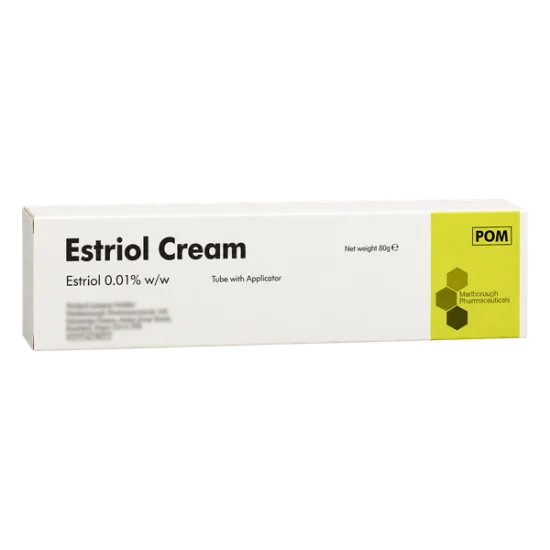
Estriol Cream contains estriol at 0.01% w/w. The amount used can differ between strengths and between users, so no single amount applies to everyone. The product is supplied as a cream in a tube with an applicator.

The European Medicines Agency describes vaginal oestrogen as a treatment approach for genitourinary symptoms linked to menopause [1].

Uses

Clinical indications in urogenital health

Vulvovaginal atrophy develops when lower oestrogen levels make the vaginal lining thinner, drier and less elastic. The condition is now often described as genitourinary syndrome of menopause because it can affect the vagina, vulva, urethra and bladder symptoms together.

Estriol Cream may be prescribed for:

  • Vaginal dryness and tightness.
  • Burning or soreness.
  • Vulval irritation linked to oestrogen deficiency.
  • Painful intercourse caused by tissue dryness.
  • Minor bleeding from fragile tissue after intercourse, once other causes have been assessed.
  • Urinary burning or urgency associated with menopausal tissue changes.
  • Recurrent urinary tract infections where vaginal oestrogen is clinically appropriate.

Local oestrogen does not replace antibiotic treatment for an active urinary tract infection. Fever, flank pain, visible blood in urine or rapidly worsening urinary symptoms need medical assessment because they may indicate infection beyond simple atrophy.

NICE recommends considering local vaginal oestrogen for genitourinary symptoms of menopause, including in people with recurrent urinary infections where the treatment is suitable [2].

Pharmacological action

Oestrogen receptors act like cellular docking sites. Estradiol binds strongly to these receptors and has greater systemic hormonal activity. Estrone is less potent than estradiol, while estriol has a shorter, weaker receptor effect. That profile helps explain why estriol is used for local urogenital symptoms rather than as the sole treatment for hot flushes, night sweats or loss of bone density.

Oestrogen improves the vaginal epithelium and supports glycogen production. This encourages a more acidic local environment, which can help maintain protective lactobacilli.

When not to use it

Estriol is not suitable for everyone. This treatment is not for you if you have any of the following unless a specialist has specifically directed otherwise:

  • Current or previous breast cancer that is sensitive to hormones.
  • A known or suspected oestrogen-dependent cancer.
  • Unexplained vaginal bleeding.
  • Previous blood clot in a deep vein, lung or other major blood vessel.
  • Active or recent arterial clotting disease, such as heart attack or stroke.
  • Severe liver disease that has not returned to normal.
  • A known allergy to estriol or an excipient in the cream.
  • Porphyria triggered by hormones.

Systemic absorption is usually lower with vaginal treatment than with oral HRT, but it is not necessarily zero. People using other oestrogen products, selective oestrogen receptor modulators, corticosteroids or medicines that affect liver enzymes may need a treatment review. Vaginal estriol should not be used to protect the uterus from unopposed systemic oestrogen; those treatment plans require their own progestogen assessment.

The British Menopause Society recognises local vaginal oestrogen as a targeted option for genitourinary symptoms, with treatment decisions based on the individual’s history and symptom pattern [4].

When this is not for you

This treatment may not be right for you if you have had hormone-sensitive breast cancer, an oestrogen-dependent cancer, unexplained vaginal bleeding, a serious blood clot, a recent heart attack or stroke, severe liver disease, an allergy to estriol or one of the cream’s ingredients, or hormone-triggered porphyria.

Tell your prescriber if you have endometriosis, fibroids, migraine with neurological symptoms, high blood pressure, gallbladder disease, epilepsy, diabetes or previous clotting problems. These conditions do not always prevent local therapy, but they can alter the risk assessment.

Adverse reactions

Local estriol is often tolerated well, but unwanted effects can occur. Early symptoms may include local burning, itching, redness, increased discharge or discomfort after application. These effects can settle as irritated tissue adapts, though persistent or worsening symptoms need review.

Possible oestrogen-related effects include:

  • Breast tenderness or enlargement.
  • Headache.
  • Nausea.
  • Abdominal discomfort.
  • Fluid retention.
  • Mood change.
  • Vaginal bleeding or spotting.
  • Skin irritation from the cream base or applicator.

The product should be stopped and assessed urgently if there is sudden chest pain, breathlessness, coughing blood, one-sided leg swelling, severe headache with neurological symptoms, or unexplained heavy vaginal bleeding. These symptoms can have causes unrelated to estriol, but they require prompt medical attention.

Vaginal bleeding after menopause must not be automatically attributed to local treatment. The MHRA advises investigation of unexplained postmenopausal bleeding, especially when it persists or returns after treatment has started [3].

One practical nuisance is discharge. Cream can soften with body heat and leak onto underwear, especially when more than the prescribed amount is used. Another is applicator discomfort; inserting it forcefully can aggravate fragile tissue, so gentle placement matters.

What it contains

Estriol Cream contains estriol at 0.01% w/w. The amount used can differ between strengths and between users, so no single amount applies to everyone. The product is supplied as a cream in a tube with an applicator.

Dosage and administration

The cream is applied intravaginally or around the vulval area according to the prescribed regimen. The tube applicator can help place the intended amount inside the vagina when intravaginal treatment is prescribed.

Dosage and administration

The correct amount differs between strengths and between users, so there is no single amount that suits everyone. Treatment schedules can also change between an initial phase and maintenance therapy.

Use involves these practical principles:

  • Apply Estriol Cream only by the route prescribed for the condition.
  • Use the tube applicator for intravaginal administration when that route is prescribed.
  • Apply the prescribed amount at the prescribed frequency.
  • Wash hands before and after application.
  • Avoid doubling the next application after a missed dose.
  • If a dose is forgotten, apply it when remembered unless the next scheduled dose is close.
  • Do not insert the cream during unexplained vaginal bleeding until the cause has been assessed.
  • Do not use tampons, douches or other intravaginal products at the same time unless advised.

The exact regimen should come from the prescriber’s directions for this formulation. A clinician may start with more frequent local treatment and then reduce use to a maintenance schedule once symptoms improve.

Do not apply extra cream to speed recovery. The vaginal lining may need several weeks to rebuild, and excess product can cause discharge, irritation or breast tenderness.

Cream leakage after application does not automatically mean the treatment failed. A thin residue can appear later, so a panty liner may be more useful than repeating the dose.

Comparison

Therapeutic alternatives to estriol cream

Treatment choice depends on symptom location, severity, previous reactions, personal medical history and whether systemic menopausal symptoms are also present. Alternative approaches can be grouped by delivery method rather than by brand.

Treatment category Hormonal content Main practical feature
Vaginal oestrogen cream Oestrogen, such as estriol or estradiol Flexible local application
Vaginal tablet or pessary Usually low-dose oestrogen Measured solid dose placed in the vagina
Vaginal moisturiser No oestrogen Regular symptom support without hormone
Vaginal lubricant No oestrogen Used before sexual activity to reduce friction

Vaginal tablets and pessaries may suit someone who prefers a measured solid formulation. A gel may feel lighter than a cream but can be less convenient for people who need external vulval application. Hormone-free moisturisers can help ongoing dryness, although they do not reproduce the tissue-restoring action of oestrogen.

Lubricants work during sexual activity. Moisturisers are used regularly. Local oestrogen addresses the hormonal cause of atrophic tissue changes. These products are not interchangeable, even when they reduce the same symptom.

Non-hormonal moisturising cream is a reasonable option for people who cannot use oestrogen or who prefer to avoid it, but its mechanism is hydration and lubrication rather than receptor stimulation. Recurrent urinary infection prevention may require a different assessment from treatment of surface dryness.

Alternative active ingredients in hormonal and non-hormonal formulations

Several active substances appear in treatments for vaginal or vulval symptoms, though they do not have the same evidence or regulatory role as estriol.

Conjugated oestrogens contain a mixture of oestrogenic compounds. They can act locally but may have a different absorption profile and dosing schedule. Estradiol cream provides a stronger oestrogen signal than estriol, so the clinical choice depends on symptoms and the intended exposure.

DHEA, also called prasterone, is an adrenal steroid precursor used in some vaginal preparations. Vaginal cells can convert it into androgenic and oestrogenic metabolites. This mechanism differs from applying estriol directly.

Equol and genistein are plant-derived compounds known as phytoestrogens. They can interact with oestrogen receptors, yet their activity is weaker and less predictable than prescription oestrogens. Evidence for treating established vulvovaginal atrophy is not equivalent to evidence for local oestrogen.

Retinol is a vitamin A derivative used in some skin products. It is not a substitute for vaginal oestrogen and can irritate delicate vulval tissue. Products intended for facial skin should not be applied vaginally unless specifically formulated and prescribed for that use.

Common mistakes

Several avoidable errors reduce comfort or make side effects more likely:

  • Using the cream only once or twice, then assuming it cannot work.
  • Applying more cream because symptoms remain during the first week.
  • Stopping immediately after improvement without discussing maintenance.
  • Treating every episode of urinary burning as bacterial infection.
  • Continuing treatment through unexplained bleeding.
  • Using ordinary cosmetic cream inside the vagina.
  • Washing the cream away immediately after application.
  • Inserting the applicator too forcefully.
  • Forgetting to mention previous hormone-sensitive cancer or clotting disease.
  • Expecting local estriol to control hot flushes.

A missed application usually does not require a double dose. Repeatedly missed applications can make symptoms fluctuate, which may be mistaken for treatment failure.

What doctors say

In clinical practice, doctors often see dryness and urinary burning treated repeatedly as infection when the main driver is menopausal tissue change. A urine test can help separate recurrent infection from irritation caused by atrophy.

A useful medical expectation is gradual improvement rather than an instant moisturising effect. Burning may ease first, while elasticity, comfort during intercourse and urinary symptoms can take longer. If symptoms improve and then return after missed applications, that pattern can indicate the need for a maintenance plan rather than a larger single dose.

Doctors also distinguish local treatment from systemic HRT. Estriol cream may help vaginal and urinary symptoms, but it is not a complete treatment for hot flushes, night sweats or osteoporosis risk. Persistent symptoms outside the urogenital area need a separate review.

The World Health Organization describes menopause as a natural stage of reproductive ageing, while treatment decisions depend on symptoms, health history and individual risk factors [5].

Questions and answers

Which symptoms mean stopping Estriol and seeking urgent medical help?

Sudden breathlessness, chest pain, coughing blood, one-sided leg swelling, severe headache with weakness, or unexplained heavy bleeding require urgent assessment. The MHRA’s 2024 safety information for oestrogen products treats thromboembolic symptoms and unexplained postmenopausal bleeding as medical warning signs. These warning signs remain clinically relevant because they can signal clotting, cardiovascular disease or another condition requiring rapid investigation. Mild transient irritation is different from these urgent symptoms, but persistent local reactions still need a treatment review.

Does Estriol cause vaginal bleeding?

Spotting or bleeding can occur, but postmenopausal bleeding should not be assumed to be a harmless side effect. NICE guidance from 2024 states that unexplained bleeding after menopause requires assessment, especially when it is recurrent or heavy. The same applies if bleeding returns after a symptom-free period. Contact the prescribing service promptly rather than increasing, reducing or restarting the cream independently.

How long does one application keep working?

The effect of one application is local and temporary; it is not possible to assign one fixed duration that applies to every user. Tissue response depends on the severity of atrophy, the treatment schedule and how consistently the cream is used. The British Menopause Society’s 2022 guidance describes local vaginal oestrogen as a treatment that often requires an initial course followed by ongoing maintenance. A single application should not be repeated early merely because some cream leaks afterwards. Keep expectations realistic.

What should I do if the expected result does not come?

Check practical factors first: correct route, prescribed frequency, gentle applicator use and whether another irritant is present. Persistent dryness, pain, discharge, bleeding or urinary symptoms may require examination, urine testing or a different treatment approach. The Royal College of Obstetricians and Gynaecologists’ 2022 guidance advises assessment when vulvovaginal symptoms do not respond as expected because infections, dermatological conditions and pelvic disorders can produce similar symptoms. Do not compensate with extra cream.

How soon can the effect become noticeable?

Some people notice less burning or improved lubrication within a few weeks, while tissue recovery and improvement during intercourse may take longer. The British Menopause Society’s 2022 guidance describes local oestrogen response as gradual, with benefit assessed over the early treatment period rather than after one dose. Symptoms can improve at different speeds, so urinary discomfort and sexual pain may not change together. Continued symptoms after an adequate treatment trial warrant review.

How does Estriol differ from estradiol cream?

Estriol has lower and shorter receptor activity than estradiol, while estradiol produces a stronger oestrogen signal. The EMA’s 2024 guidance distinguishes local vaginal oestrogen products by their active substance, strength and formulation rather than treating them as interchangeable. UK prescribing decisions depend on symptoms, previous treatment, contraindications and the intended level of local or systemic exposure. A stronger active substance is not automatically a better choice.

Do you offer anonymous delivery?

Your order will be securely packed and shipped within 24 hours. This is exactly what your package will look like (images of an actual item sent). It has the size and look of a regular private letter (24x11x0.7 cm) and its contents cannot be seen.

Estriol: What Customers Say

3.8
Based on 4 reviews
Louise, 60 Coventry Several weeks
Verified
Rating: 3 out of 5

The dryness and stinging had made intercourse uncomfortable for months. The first applications felt slightly irritating, but that settled. I found the leakage inconvenient at night, so I used a liner rather than applying more.

22 Oct 2026
Charlotte, 39 Stoke-on-Trent About three weeks
Verified
Rating: 3.5 out of 5

I noticed less soreness after about three weeks. It did not help my hot flushes, which I had expected it to do, so my clinician explained that this cream was aimed at local symptoms.

27 Oct 2026
Tracey, 51 Cambridge The initial treatment period
Verified
Rating: 5 out of 5

The urinary urgency became less troublesome after the initial treatment period. I still needed testing when symptoms returned because the cream was not a substitute for checking an infection.

1 Oct 2026
Lisa B., 57 Oxford Several weeks
Verified
Rating: 3.5 out of 5

The product helped with dryness, but I disliked the applicator and occasionally had mild burning. I stopped and arranged a review when spotting returned instead of continuing automatically.

6 Oct 2026

Sources

  1. European Medicines Agency (2014). Assessment report: oestriol-containing medicinal products for topical vaginal use.
  2. National Institute for Health and Care Excellence (2024). Menopause: diagnosis and management.
  3. Medicines and Healthcare products Regulatory Agency (2024). Hormone-replacement therapy: updated advice on risks and benefits.
  4. British Menopause Society (2022). Genitourinary syndrome of menopause: practical guidance.
  5. World Health Organization (2022). Menopause.
Get our free app Shop faster and track your orders Install