Skip to content
Save up to 80%
Aldactone
Active ingredient: Spironolactone

Aldactone

Quality products
24/7 Support
Fast delivery
Delivery from 4 days
Select pack Package Per tablet Price

Free delivery on orders from £ 200.00, free express delivery from £ 300.00

Secure Payments
Track your order
Best price guarantee

Aldactone is prescribed for fluid retention, selected heart conditions, hypertension and excess aldosterone. It helps the kidneys remove sodium and water while limiting potassium loss.

About this product

Spironolactone, the active ingredient of Aldactone, is a potassium-sparing diuretic and mineralocorticoid-receptor antagonist.

Generic availability of spironolactone

Spironolactone is the generic name for the active pharmaceutical ingredient in Aldactone. A generic spironolactone tablet contains the same active substance and is assessed against the same pharmaceutical quality requirements for strength, identity and performance.

The brand name and the generic name can appear in clinical records for the same active ingredient. The prescribed tablet strength still matters because dosing differs between strengths and between users.

Uses

Aldactone is used when blocking aldosterone can improve fluid balance, blood pressure or hormone-related disease. The FDA-approved uses include heart failure, hypertension as part of a treatment plan, oedema and primary hyperaldosteronism.

Clinical use Therapeutic purpose
Heart failure Reduce aldosterone-related sodium and fluid retention
Hypertension Support blood-pressure control, often alongside other treatment
Oedema Reduce excess fluid associated with selected cardiac, hepatic or renal conditions
Primary hyperaldosteronism Counter excessive aldosterone activity

Heart failure can cause the body to retain sodium and water. Aldactone reduces this aldosterone-driven retention and may support symptom control in selected patients. In primary hyperaldosteronism, the adrenal glands produce too much aldosterone, which can raise blood pressure and disturb potassium balance.

For oedema, treatment depends on its cause. Fluid accumulation linked to cirrhosis, nephrotic conditions or heart failure may respond to aldosterone blockade, though the dose and monitoring plan differ.

The MHRA and EMA emphasise renal function, potassium monitoring and interaction review when spironolactone is prescribed. A clinician may also use it for hypertension that remains difficult to control after other medicines.

Dermatological and endocrinological off-label applications

Spironolactone has anti-androgenic activity in addition to its diuretic action. For that reason, clinicians may prescribe it off-label for acne, androgenic alopecia and hormone-related conditions such as polyendocrine metabolic ovarian syndrome (PMOS).

Off-label means the prescriber is using an established medicine for a purpose outside the main licensed indication. This use can be appropriate when clinical evidence and the patient’s circumstances support it, but the monitoring requirements remain important.

Spironolactone may reduce androgen activity at hormone receptors and lower androgen production. That can help some patients with acne or unwanted hair growth. Improvement is gradual, and treatment plans often involve several months of assessment rather than an immediate response.

Use for androgenic alopecia requires attention to pregnancy risk because anti-androgenic effects may harm a developing male fetus. Men receiving spironolactone can develop breast tenderness or enlargement. Changes in menstrual bleeding can occur in women.

For hormonal skin or hair conditions, taking photographs at consistent intervals can show gradual change more reliably than checking the mirror every day.

Pharmacological action

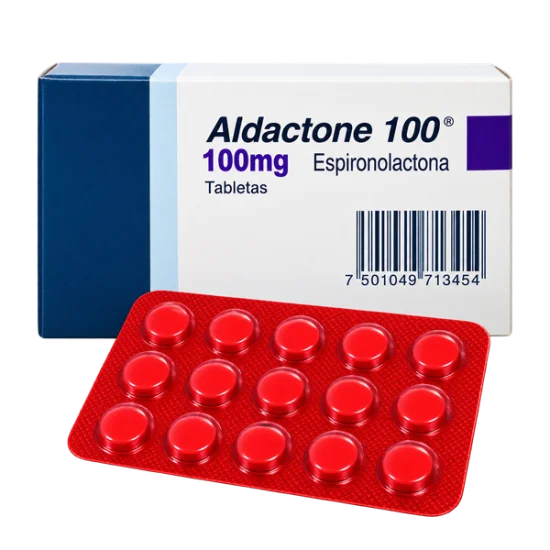
Spironolactone antagonises aldosterone receptors in the kidneys, reducing aldosterone-driven sodium reabsorption and potassium excretion. This promotes sodium and water loss while helping retain potassium. It also has anti-androgenic activity through effects on androgen receptors and androgen production.

When not to use it

Contraindications

Aldactone is not for you if you have:

  • Hyperkalaemia
  • Severe renal impairment or acute kidney injury
  • Anuria, meaning little or no urine production
  • Addison’s disease, also called primary adrenal insufficiency
  • A known allergy to spironolactone or a tablet ingredient
  • Previous serious intolerance to spironolactone

Pregnancy requires a separate clinical decision. Spironolactone’s anti-androgenic action creates concern during pregnancy, especially for a male fetus. Breastfeeding also requires assessment because spironolactone and its metabolites may enter breast milk.

Important interactions

  • Lisinopril and other ACE inhibitors: the combination can increase potassium and worsen renal impairment.
  • Losartan and other angiotensin-receptor blockers: potassium elevation and kidney injury become more likely.
  • Potassium supplements: these can produce dangerous potassium accumulation.
  • Ibuprofen and other NSAIDs: reduced kidney blood flow can weaken the diuretic effect and increase renal risk.
  • Aspirin: interaction risk depends on the dose and the patient’s kidney function; regular use should be reviewed.
  • Other potassium-sparing diuretics: combined potassium retention can become excessive.
  • Trimethoprim-containing antibiotics: potassium elevation can occur, especially in older adults or people with reduced kidney function.
  • Lithium: altered renal handling can raise lithium exposure.
  • Digoxin: spironolactone may affect digoxin measurements and clinical response.

The FDA label and MHRA safety information support careful review of renal function, potassium and interacting medicines before treatment and during follow-up [3]. Do not add an anti-inflammatory painkiller regularly without checking its suitability against the existing treatment plan.

When this is not for you

Aldactone may not be suitable if you have high potassium, serious kidney problems, little or no urine production, Addison’s disease, or an allergy to spironolactone. Tell your clinician if you are pregnant, planning a pregnancy or breastfeeding. Your treatment also needs careful review if you take ACE inhibitors, angiotensin-receptor blockers, potassium supplements, NSAIDs, lithium, digoxin, trimethoprim-containing antibiotics or another potassium-sparing diuretic.

Adverse reactions

Aldactone can cause changes in fluid balance, kidney function and hormone activity. The main laboratory concern is hyperkalaemia, meaning an excessively high blood potassium concentration. Severe hyperkalaemia can affect cardiac rhythm.

Reported adverse effects include:

  • Increased urination
  • Dizziness, especially after standing
  • Headache
  • Nausea or abdominal discomfort
  • Fatigue
  • Breast tenderness or gynecomastia
  • Menstrual irregularities
  • Reduced libido
  • Changes in kidney function
  • Hyperkalaemia

Gynecomastia is more relevant during prolonged treatment and can be uncomfortable or emotionally distressing. It may improve after dose reduction or discontinuation, though the timing varies.

Dizziness can occur when blood pressure or circulating fluid volume falls too far. Rise slowly from a chair or bed, especially during the first days of treatment or after a dose increase.

Seek urgent medical assessment for severe weakness, palpitations, fainting, confusion or muscle paralysis. These symptoms can occur with significant potassium disturbance or kidney impairment. Marked reduction in urine output, rapid swelling or breathlessness also requires prompt assessment.

Blood tests commonly include serum potassium and creatinine. The frequency depends on kidney function, treatment indication, age and interacting medicines. The product information for spironolactone lists hyperkalaemia, renal impairment and endocrine effects among the clinically significant risks [2].

Avoid potassium-based salt substitutes unless the prescriber has approved them. They can contain enough potassium to create a problem when combined with a potassium-sparing diuretic.

What it contains

Aldactone contains spironolactone, a potassium-sparing diuretic available as oral tablets. The prescribed tablet strength is selected according to the treatment plan, and dosing differs between strengths and between users, so there is no single amount that suits everyone. Spironolactone blocks the action of aldosterone, a hormone that encourages sodium retention and potassium excretion in the kidneys.

This mechanism differs from loop diuretics, such as furosemide, which remove sodium and water rapidly but can lower potassium. Thiazide diuretics also promote potassium loss. Aldactone can preserve potassium, so blood potassium and kidney function require attention during treatment.

The FDA prescribing information describes spironolactone as an aldosterone antagonist with diuretic, antihypertensive and endocrine effects [1]. It is a prescription-only treatment in the UK.

Aldactone can increase potassium rather than lower it. Avoid starting potassium tablets or potassium-based salt substitutes unless the prescriber has specifically included them in the treatment plan.

Dosage and administration

Aldactone is taken by mouth as a tablet. The prescriber selects the dose according to the condition, kidney function, potassium level, age, other medicines and response to treatment. Dosing differs between strengths and between users, so there is no single amount that suits everyone.

  • Take the tablet at the prescribed frequency.
  • Take it at a consistent time each day.
  • A morning dose may reduce disruption from increased urination during sleep.
  • Take a missed dose when remembered unless the next dose is near.
  • Do not double the next dose after a missed tablet.
  • Swallow the tablet with water unless the prescriber has given different instructions.
  • Continue laboratory monitoring at the intervals arranged for your treatment.

Aldactone can be taken with food, but taking it consistently in relation to meals may help maintain predictable absorption. Treatment duration depends on the indication. Some people receive a short course for fluid retention, while heart failure or endocrine treatment may continue longer with periodic review.

The tablet should not be stopped suddenly without a prescribing decision. Stopping can allow fluid retention, blood pressure elevation or hormone-related symptoms to return.

If Aldactone is taken later in the day, increased urination may interrupt sleep. A morning schedule is often more practical, provided it matches the prescribed instructions.

Comparison

Aldactone is selected for its aldosterone blockade and potassium-sparing action. Other medicines may remove fluid more rapidly, target blood pressure through another pathway or provide more selective mineralocorticoid-receptor blockade.

Treatment Main pharmacological difference Potassium effect and typical role
Aldactone — spironolactone Blocks aldosterone receptors and has anti-androgenic activity May raise potassium; used for heart failure, oedema, hypertension and hyperaldosteronism
Eplerenone More selective mineralocorticoid-receptor antagonist May raise potassium; often considered when endocrine adverse effects from spironolactone are problematic
Furosemide Loop diuretic that strongly increases sodium and water excretion May lower potassium; useful when rapid or substantial fluid removal is needed

Furosemide can be more suitable when marked congestion requires a stronger diuretic response. Its potassium-wasting effect creates a different monitoring problem. Eplerenone acts on the same hormone pathway as spironolactone but has less anti-androgenic activity; kidney function and potassium still require monitoring.

Lisinopril and losartan are not diuretics. They affect the renin–angiotensin system and may be used for blood pressure or heart failure, sometimes alongside Aldactone. Combining medicines from these groups can be clinically useful, but it also increases the need for potassium and renal monitoring.

The EMA describes mineralocorticoid-receptor antagonists as treatments requiring attention to hyperkalaemia and renal function, especially when used with renin–angiotensin system medicines [4].

Common mistakes

Several everyday habits can reduce treatment quality or increase risk:

  • Taking extra tablets after a missed dose
  • Using potassium salt substitutes without recognising their potassium content
  • Starting ibuprofen repeatedly for pain without reviewing kidney risk
  • Assuming dizziness is harmless and continuing strenuous activity
  • Skipping blood tests because the symptoms have improved
  • Taking the tablet at irregular times and then judging the effect from day to day
  • Stopping treatment as soon as swelling improves
  • Forgetting to mention Aldactone before a new prescription is issued
  • Treating a change in breast tissue or menstrual bleeding as unrelated
  • Continuing a high-potassium diet after a clinician has advised moderation

Aldactone can make dehydration more consequential. Vomiting, diarrhoea, fever or heavy sweating may alter kidney function and electrolyte balance. Contact the prescribing service promptly if these problems persist.

One easily missed detail is the interaction between spironolactone and routine anti-inflammatory use. Occasional use may carry a different risk from repeated high-dose ibuprofen, but both should be considered within the full medication history.

What doctors say

In clinical practice, doctors usually judge Aldactone by more than daily urine volume. A reduction in swelling, improved breathlessness, better blood pressure control or correction of aldosterone excess may be the real treatment goal.

A prescriber will often review kidney function and potassium after initiation or a dose change. The schedule becomes more frequent when a patient is older, has chronic kidney disease, uses an ACE inhibitor or takes an NSAID.

Patients can misinterpret increased urination as proof that the dose is working perfectly. It is only one treatment effect. Excessive urination, dizziness or worsening kidney results may mean the regimen needs adjustment.

For hormonal uses, clinicians set slower expectations. Acne, scalp hair changes and menstrual effects do not respond on the same timetable as fluid retention. Treatment may be stopped or changed if breast symptoms, menstrual disruption or potassium abnormalities become troublesome.

The practical clinical goal is the lowest dose that controls the target condition without causing hypotension, kidney deterioration or potassium elevation.

Questions and answers

Can Aldactone be used during pregnancy or breastfeeding?

Pregnancy and breastfeeding require an individual prescribing assessment because spironolactone has anti-androgenic activity and its metabolites can pass into breast milk. The FDA label reviewed in 2023 advises attention to potential fetal and infant exposure, with special concern during pregnancy. The EMA also identifies reproductive and lactation considerations in spironolactone product information. Treatment should be reviewed promptly if pregnancy occurs or is planned.

How soon does the effect of Aldactone become noticeable?

Increased urination and reduced fluid retention may appear within days, while blood-pressure improvement and endocrine benefits can take longer. The NHS information current in 2025 describes spironolactone as a treatment whose response depends on the condition and treatment plan. Heart-failure symptoms, acne or androgen-related hair changes should be assessed over a longer period rather than judged after one or two tablets. A lack of immediate change does not justify taking extra doses.

Can Aldactone affect driving, concentration or work with machinery?

Dizziness, drowsiness or light-headedness can occur, especially when treatment begins or blood pressure falls. The MHRA safety information reviewed in 2025 advises caution with activities requiring alertness if these effects occur. Do not drive or operate machinery while dizzy, faint or unable to concentrate normally. Alcohol can worsen light-headedness in some people by adding to the blood-pressure-lowering effect.

What happens when Aldactone is stopped, and is tapering required?

Stopping Aldactone can allow fluid retention, high blood pressure or hormone-related symptoms to return, depending on the reason for treatment. The British National Formulary guidance used in 2025 advises that the prescribing clinician should decide whether treatment can stop and whether another medicine is needed. A universal tapering schedule does not apply to every patient. Sudden discontinuation without a plan is risky when Aldactone is controlling heart-failure fluid balance or excess aldosterone.

Which diet, exercise or habits help or hinder the result?

The WHO guidance available in 2025 supports moderate sodium intake, appropriate physical activity and avoidance of excess alcohol for cardiovascular health. A diet high in potassium-rich salt substitutes, potassium supplements or very large quantities of potassium-containing foods may be unsuitable for some people taking spironolactone. Exercise should match cardiac status, blood pressure and fluid symptoms rather than follow a fixed routine. Vomiting, diarrhoea and heavy sweating can disturb kidney function and electrolytes, so persistent fluid loss should be reported promptly.

Do you offer anonymous delivery?

Your order will be securely packed and shipped within 24 hours. This is exactly what your package will look like (images of an actual item sent). It has the size and look of a regular private letter (24x11x0.7 cm) and its contents cannot be seen.

Comparison

Comparison table: Cardiovascular Health

Aldactone: What Customers Say

3.8
Based on 4 reviews
Richard, 44 Portsmouth For several weeks
Verified
Rating: 5 out of 5

The ankle swelling eased first, and I was sleeping better because breathing felt less difficult. I had to move the tablet to the morning because taking it after lunch meant several trips to the bathroom at night.

23 Oct 2026
Steven, 39 Dundee For three months
Verified
Rating: 3.5 out of 5

The first month did not look different, so I nearly gave up. By the third month the breakouts were less frequent, although I noticed some breast tenderness and had follow-up blood tests.

29 Oct 2026
Craig, 58 Norwich During the first week
Verified
Rating: 3 out of 5

The tablets helped with the swelling, but I felt light-headed when standing during the first week. The dose was adjusted, and I became more comfortable. The blood tests were an inconvenience, yet they helped guide the treatment.

1 Oct 2026
Ben, 46 Middlesbrough Until stopping without a planned review
Verified
Rating: 3.5 out of 5

I stopped when my legs looked better and did not taper or arrange a review. The swelling returned, so the prescribing team restarted the plan and explained why the underlying condition still needed treatment.

10 Oct 2026

Sources

  1. U.S. Food and Drug Administration (2023). Aldactone (spironolactone) prescribing information.
  2. Medicines and Healthcare products Regulatory Agency (2024). Spironolactone: Summary of Product Characteristics.
  3. Medicines and Healthcare products Regulatory Agency (2023). Drug Safety Update: spironolactone and monitoring of potassium and renal function.
  4. European Medicines Agency (2022). Spironolactone: European public assessment and product information.
Get our free app Shop faster and track your orders Install