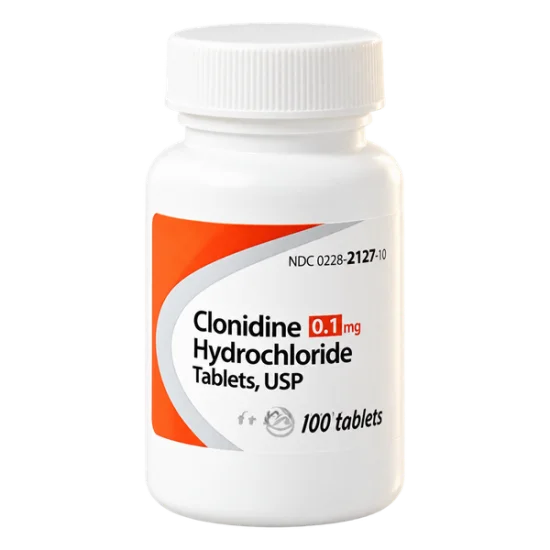
Graham, 53 - Hull, took the 0.1 mg tablets for blood-pressure control for several weeks. He reported better readings but felt sleepy during the first part of the day. Moving the evening dose later helped, although his prescriber still monitored his pulse.
Clonidine is a centrally acting alpha-2 adrenergic agonist used mainly for people requiring blood-pressure control. It lowers blood pressure by reducing sympathetic nerve activity from the brain; the dose is decided individually, taking age, other medicines and health conditions into account.
About this product
Clonidine hydrochloride, the active ingredient of Clonidine, is a centrally acting alpha-2 adrenergic agonist used mainly for hypertension.
Uses
Clonidine is primarily associated with blood-pressure control. In the UK, its use depends on the clinical situation, prescribing assessment and the chosen formulation. Specialist clinicians may also use clonidine for selected symptoms outside its main hypertension indication.
| Clinical use | Place in treatment |
|---|---|
| Hypertension | Main therapeutic use; lowers central sympathetic drive |
| Menopausal hot flushes | Specialist or off-label use when other options are unsuitable |
| ADHD or tic symptoms | Specialist use in selected patients |
| Withdrawal-related symptoms | May reduce autonomic symptoms under supervised care |
For menopausal vasomotor symptoms, clonidine may reduce flushing intensity in some patients, though dry mouth, dizziness and sedation can limit its usefulness. NHS and NICE clinical practice generally place other options ahead of clonidine for many patients, so the choice depends on symptoms, medical history and previous treatment.
In ADHD and tic disorders, clonidine may be considered by a specialist because its central action can reduce arousal and sympathetic activation. It is not a universal first choice, and sedation can affect school, work or driving.
Clonidine has also been used in specialist settings for autonomic symptoms during opioid or alcohol withdrawal and for selected pain-management situations. These uses require a defined clinical plan because clonidine does not remove the underlying dependence and abrupt withdrawal can produce a rapid rise in blood pressure.
Pharmacological action
Clonidine belongs to the centrally acting antihypertensive medicines. It stimulates alpha-2 adrenergic receptors in the brainstem and also interacts with imidazoline receptors. This reduces the sympathetic signals that normally increase heart rate, tighten blood vessels and raise blood pressure.
Receptor interactions and central sympathetic suppression
Sympathetic activity is part of the body’s automatic response system. It increases vascular tone and cardiac stimulation. By reducing this output, clonidine can lower peripheral vascular resistance, slow the pulse and reduce blood pressure.
The FDA prescribing information describes these reactions as characteristic pharmacological effects of clonidine [1].
When not to use it
Clonidine may be unsuitable or require specialist oversight in the following situations:
- Previous serious allergy to clonidine or an ingredient in the tablets
- Marked bradycardia or clinically significant conduction disease
- Recurrent fainting or severe low blood pressure
- Severe kidney impairment
- Recent stroke or heart attack requiring close cardiovascular monitoring
- Pregnancy or breastfeeding without an individual prescribing decision
- Concurrent treatment with several medicines that lower blood pressure or cause sedation
- A history of poor tolerance to centrally acting antihypertensives
When this is not for you
Clonidine may not be for you if you have marked bradycardia, recurrent fainting, severe low blood pressure or difficulty following a gradual withdrawal plan.
Pregnancy requires a separate treatment assessment because blood-pressure medicines are selected according to pregnancy-specific guidance. Clonidine is not a medicine to start, stop or change independently during pregnancy.
Adverse reactions
The most familiar adverse effects are drowsiness, sedation, dry mouth, dizziness and fatigue. These effects often appear early or after an increase in dose. Some people find that sleepiness becomes less troublesome after continued treatment, while others remain sensitive throughout therapy.
Common reactions include:
- Dry mouth or throat
- Sleepiness and reduced alertness
- Dizziness, especially when standing
- Constipation
- Headache
- Weakness or fatigue
- Slow heart rate
- Low blood pressure
- Disturbed sleep or vivid dreams
Standing dizziness can result from a blood-pressure drop when moving from sitting or lying to standing. Rise slowly, especially during the first days of treatment. Persistent faintness, falls or unusual weakness require prompt medical review.
Seek urgent medical attention for fainting, severe confusion, chest pain, severe shortness of breath, a very slow or irregular heartbeat, or a marked blood-pressure rise after missed doses or abrupt discontinuation. Facial swelling, tongue swelling, breathing difficulty or a widespread blistering rash may indicate a serious allergic or skin reaction.
Dry mouth is often more than a minor nuisance. It can affect speech, swallowing and dental comfort. Frequent water intake, sugar-free gum and regular dental care may help, but persistent symptoms should be reported if they interfere with eating or oral hygiene.
What it contains
The product is supplied as tablets containing clonidine hydrochloride. The dose is decided individually, taking age, other medicines and health conditions into account.
Dosage and administration
Clonidine tablets are taken by mouth. The prescribing clinician selects the dose and adjusts it according to blood-pressure response, pulse, age, kidney function, other medicines and treatment purpose.
- Take the tablets at the prescribed times each day.
- Swallow the tablet with water unless a prescriber gives different instructions.
- Do not increase the dose because a single blood-pressure reading remains high.
- Do not stop treatment suddenly.
- If a dose is missed, take it when remembered unless the next scheduled dose is near; do not double the next dose.
- If several doses have been missed, obtain individual instructions before restarting the usual schedule.
A key safety issue is rebound hypertension. Stopping clonidine suddenly can cause a sharp increase in blood pressure, headache, agitation, tremor, sweating and rapid heartbeat. The usual approach is a gradual reduction planned by the prescriber. The risk can be higher when clonidine is taken with a beta-blocker, so the order of withdrawal may need careful planning.
Clonidine is available in clinical practice in more than one formulation, including oral preparations and injectable forms. This page concerns oral tablets. Injectable clonidine is used in monitored clinical settings and should not be treated as interchangeable with tablets on a milligram-for-milligram basis.
One practical detail is easy to miss: clonidine lowers sympathetic activity, so a low pulse may be more relevant than a single isolated blood-pressure reading. Record both when monitoring treatment at home.
Comparison
The best antihypertensive depends on age, pregnancy status, kidney function, cardiovascular disease, diabetes, pulse rate and previous treatment response. Clonidine is useful in selected circumstances, yet its sedation and withdrawal risk make it unsuitable for some patients.
| Agent or class | Main pharmacological approach | Typical clinical role |
|---|---|---|
| Clonidine | Reduces central sympathetic outflow | Selected hypertension and specialist indications |
| Methyldopa | Central conversion to an alpha-2 agonist | Hypertension in pregnancy in appropriate cases |
| Labetalol or nifedipine | Beta and alpha blockade, or calcium-channel blockade | Common alternatives selected by clinical profile |
Methyldopa may be considered for hypertension in pregnancy when labetalol or nifedipine is unsuitable, in line with NICE pregnancy guidance [2]. It also causes fatigue in some patients and is not automatically preferable for every person.
Labetalol reduces cardiovascular stimulation through beta and alpha receptor effects. Nifedipine relaxes vascular smooth muscle through calcium-channel blockade. These medicines have different interaction patterns and side-effect profiles, so a simple strength-to-strength comparison is not clinically reliable.
Moxonidine is another centrally acting option in some settings. Its use depends on local prescribing practice, renal function and the patient’s response. Changing from clonidine to another agent requires a planned transition rather than an improvised substitution.
Common mistakes
Poor outcomes often result from changes made without accounting for clonidine’s central action.
- Stopping suddenly after feeling better
- Taking an extra tablet after one high reading
- Doubling a dose after a missed tablet
- Combining clonidine with alcohol and then driving
- Ignoring a slow pulse because the blood-pressure number looks satisfactory
- Standing quickly after taking a dose and becoming dizzy
- Forgetting to mention sedating antihistamines, sleep aids or pain medicines
- Changing between clonidine formulations without a prescribed conversion
- Taking doses at inconsistent times
- Assuming that dry mouth is unrelated to treatment
Blood pressure can rise before a person feels unwell after abrupt withdrawal. A lack of symptoms does not make sudden discontinuation safe.
What doctors say
Clinicians generally view clonidine as a medicine that rewards careful titration. It can lower blood pressure through a mechanism that differs from many commonly used antihypertensives, yet sedation and rebound hypertension limit casual dose changes.
A doctor will usually want to know:
- Blood-pressure readings at different times of day
- Pulse rate and symptoms such as dizziness or fainting
- Whether doses have been missed
- The timing of sleepiness in relation to each tablet
- All medicines that affect blood pressure, alertness or heart rate
- Any pregnancy, breastfeeding or kidney-related considerations
The treatment goal is not the lowest possible blood pressure at one reading. It is a sustained response without faintness, excessive fatigue or clinically significant bradycardia. Home readings are more useful when taken at consistent times and recorded with symptoms.
A common clinical error is to interpret early tiredness as proof that the medicine is unsuitable. Sometimes the effect settles; sometimes it does not. The correct response depends on blood pressure, pulse, severity of symptoms and the reason clonidine was prescribed.
Questions and answers
Can alcohol be used while taking Clonidine?
Alcohol can add to clonidine-related drowsiness, dizziness and reduced alertness. NHS medicine information from 2024 and the FDA label support this caution. NHS medicines guidance and the FDA clonidine label describe central nervous system depression as a relevant safety concern, with the risk more noticeable after starting treatment or changing the dose [3]. Avoid driving or hazardous work if alcohol and clonidine have been combined. Regular alcohol use should be discussed during the prescribing review because it can complicate blood-pressure assessment.
Which symptoms require urgent medical attention?
Urgent assessment is needed for fainting, chest pain, severe breathing difficulty, facial or tongue swelling, profound confusion, a very slow heartbeat or a major blood-pressure rise after missed doses. The MHRA safety information cited here is from 2024. The MHRA’s medicine-safety approach treats serious cardiovascular, neurological and allergic symptoms as reasons for prompt evaluation rather than home dose adjustment [4]. Severe headache with weakness, speech difficulty or vision loss also requires emergency care. Do not take extra clonidine to correct a worrying reading unless a clinician has provided a specific plan.
Can Clonidine be used during pregnancy or breastfeeding?
Pregnancy and breastfeeding require an individual assessment of the mother’s blood pressure, the reason for treatment and available alternatives. NICE guidance from 2019 provides the pregnancy-specific treatment framework. NICE guidance on hypertension in pregnancy sets out preferred treatment pathways and does not make clonidine a routine self-selected option. Breastfeeding decisions depend on the dose, duration and the infant’s health, including possible sleepiness or feeding difficulty. A clinician should review clonidine before it is started, stopped or changed during pregnancy or lactation.
What should happen if the expected result does not occur?
Do not increase clonidine independently when blood pressure remains above the agreed target. WHO hypertension guidance from 2021 supports structured review rather than unsupervised dose changes. The prescriber may review measurement technique, adherence, salt intake, interacting medicines, pulse rate, kidney function and the need for a different treatment plan. WHO hypertension guidance supports repeated, structured blood-pressure assessment rather than reacting to a single reading [5]. A rapid rise, severe headache, chest pain or neurological symptom needs urgent assessment.
Is Clonidine suitable for people under 18?
Use in children and adolescents depends on the indication, age, formulation and specialist supervision. The EMA guideline cited here was published in 2023. Paediatric dosing cannot be safely inferred from an adult tablet schedule because body size, kidney function, pulse and the treatment goal all affect the decision. The EMA expects paediatric medicines to be assessed according to age-specific evidence and risk management. Children or teenagers should not use an adult’s clonidine tablets without a prescription and a clearly defined dosing plan.
Do you offer anonymous delivery?
Your order will be securely packed and shipped within 24 hours. This is exactly what your package will look like (images of an actual item sent). It has the size and look of a regular private letter (24x11x0.7 cm) and its contents cannot be seen.
Comparison
Abana
Adalat
Aldactone
Arjuna
Azor
Clonidine: What Customers Say
Victoria, 53 - Hull, used 0.1 mg clonidine tablets for persistent hot flushes for about two weeks after other options had caused problems. She noticed fewer night-time episodes after about two weeks, yet dry mouth remained irritating and required regular water during work shifts.
Robert, 52 - Luton, missed several doses of 0.1 mg clonidine tablets during a busy week and developed a pounding headache with a much higher reading. The episode improved after medical advice, but he said the withdrawal risk was not something he had expected.
Peter, 32 - Liverpool, received 0.1 mg clonidine tablets for three weeks as part of specialist management for attention and tic symptoms. He found it calming but described afternoon fatigue and needed a slower dose adjustment before returning to normal driving.
Simon, 51 - Bournemouth, took 0.1 mg clonidine tablets for four weeks for blood-pressure control. He found the treatment reduced his readings but was too tired to continue normal activities comfortably, so his prescriber reviewed the plan.
Sources
- U.S. Food and Drug Administration (2016). Catapres (clonidine hydrochloride) tablets prescribing information.
- National Institute for Health and Care Excellence (2019). Hypertension in pregnancy: diagnosis and management (NG133).
- National Health Service (2024). Clonidine: medicine information.
- Medicines and Healthcare products Regulatory Agency (2024). Clonidine: Summary of Product Characteristics (SmPC).
- World Health Organization (2021). Guideline for the pharmacological treatment of hypertension in adults.