Skip to content
Save up to 80%
Colchicine
Active ingredient: Colchicine

Colchicine

Quality products
24/7 Support
Fast delivery
Delivery from 4 days
Select pack Package Per tablet Price

Free delivery on orders from £ 200.00, free express delivery from £ 300.00

Secure Payments
Track your order
Best price guarantee

Colchicine reduces the inflammatory response triggered by urate crystals in gout. It is prescribed for adults with acute gout flares or recurrent attacks requiring prevention.

About this product

The 500 microgram tablet works on inflammatory cells rather than acting as a conventional painkiller. Colchicine is an anti-inflammatory treatment used mainly in gout.

Uses

Colchicine is an anti-inflammatory treatment used mainly in gout. Gout develops when monosodium urate crystals collect inside a joint and activate neutrophils, causing rapid swelling, warmth, redness and pain. Colchicine limits this inflammatory reaction; it does not remove uric acid from the body.

Management of acute gout flares

Treatment is most useful when started promptly after gout symptoms begin. Colchicine may reduce the inflammatory response during an attack, although it does not work like paracetamol or an opioid analgesic. It also does not lower the uric acid concentration that caused the flare.

A late dose may still be prescribed, but the benefit can be smaller once inflammation has become well established. Patients should never increase the amount because a flare feels severe. Colchicine has a narrow safety margin, so taking extra tablets can cause serious toxicity.

Prophylactic gout therapy

Some people receive colchicine to reduce flares during periods when urate-lowering treatment is being started or adjusted. Preventive use aims to control the inflammatory response while urate levels change gradually. It is not a replacement for an appropriate long-term gout plan.

Keep a written record of every colchicine dose and the time it was taken. This simple habit helps prevent accidental repeat dosing when pain disrupts sleep or concentration.

Pharmacological action

Colchicine binds to tubulin, a structural protein needed for microtubule formation. Microtubules help neutrophils move, change shape and release inflammatory substances. By interfering with these processes, colchicine reduces the cellular response to urate crystals.

It also affects inflammasome signalling, including the NLRP3 inflammasome. This complex helps activate interleukin-1 beta, a powerful inflammatory messenger involved in gout. The result is a targeted reduction in inflammation rather than direct numbing of pain.

The mechanism explains both the benefit and the risk. Neutrophils are central to gout inflammation, yet rapidly dividing cells in the gastrointestinal tract, bone marrow and hair follicles can also be affected by excessive colchicine exposure.

Do not treat worsening diarrhoea as proof that the medicine is “working”. With colchicine, persistent gastrointestinal symptoms can be an early sign of excessive exposure and require prompt medical review.

When not to use it

Colchicine may not be for you if you have severe kidney or liver impairment, take an interacting medicine, or have previously experienced serious toxicity.

Extra caution is needed with:

  • significant renal impairment;
  • significant hepatic impairment;
  • blood disorders or reduced bone-marrow function;
  • older age or frailty;
  • dehydration, persistent vomiting or diarrhoea;
  • clarithromycin, erythromycin, ciclosporin, azole antifungals or selected antiviral medicines;
  • medicines associated with muscle injury, including some lipid-lowering treatments;
  • pregnancy or breastfeeding, where the indication and dose require individual assessment.

When this is not for you

Colchicine may not be for you if you have severe kidney or liver impairment, take an interacting medicine, or have previously experienced serious toxicity.

Colchicine toxicity can develop without dramatic early symptoms. New muscle weakness, numbness, unusual bleeding, fever or severe gastrointestinal symptoms require urgent medical attention.

Adverse reactions

The most familiar adverse effects are diarrhoea, nausea, abdominal pain and vomiting. These symptoms may appear before more serious toxicity. Persistent or severe diarrhoea should not be managed by taking less medicine without medical direction.

Serious toxicity can affect the blood, muscles, nerves, kidneys and liver. Warning symptoms include marked weakness, muscle pain, numbness, unusual bruising, fever, sore throat, reduced urine output or severe vomiting. Severe poisoning can be life-threatening.

A UK regulatory review describes the narrow therapeutic index of colchicine and the need for careful prescribing, especially when renal or hepatic function is reduced [1].

Kidney and liver problems

Reduced kidney function can allow colchicine to accumulate. Liver disease may also alter clearance, especially when combined with kidney impairment. The prescriber may avoid colchicine, reduce exposure or choose another treatment according to the clinical situation.

Older age, dehydration and acute illness can increase risk. A person who develops vomiting or diarrhoea while taking colchicine may become dehydrated, further affecting kidney function.

Important drug interactions

Strong inhibitors of CYP3A4 or P-glycoprotein can raise colchicine concentrations. Examples include clarithromycin, erythromycin, ciclosporin, some azole antifungals and certain antiviral medicines. Statins and fibrates may increase concern about muscle toxicity when used with colchicine.

Grapefruit products may affect drug metabolism and should be discussed before use. Do not combine colchicine with a new antibiotic or antifungal without confirming that the combination is appropriate.

What it contains

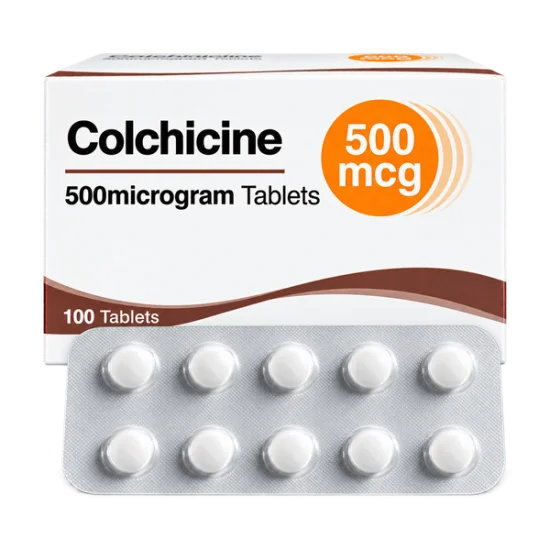
Each tablet contains 500 micrograms. A dose is decided individually, taking age, other medicines and health conditions into account.

Dosage and administration

The product is supplied as 500 microgram tablets. Dosing considers age, medicines and health conditions.

  • Take the prescribed number of tablets by mouth at the prescribed interval.
  • Use the same dosing schedule each day when colchicine is prescribed for prevention.
  • Follow the treatment duration set for the specific indication.
  • If a dose is missed, take it only according to the prescriber’s instructions; do not automatically double the next dose.
  • Do not take extra tablets for pain that is not improving.
  • Do not start a second course without a new dosing instruction.

Colchicine tablets should be swallowed as directed. Crushing, chewing or splitting can alter how the dose is taken and may make accurate administration harder. A missed dose is safer to manage with professional dosing advice than by taking two doses together.

Before treatment begins, make a complete list of prescription medicines, over-the-counter products and supplements. Colchicine interactions can develop when another medicine slows its breakdown or reduces kidney clearance.

Comparison

Colchicine differs from non-steroidal anti-inflammatory drugs and corticosteroids because its main action is directed at inflammatory-cell activity linked to urate crystals. The choice depends on kidney function, stomach or cardiovascular risk, diabetes, infection risk and other medicines.

Approach Main action Typical clinical trade-off
Colchicine Reduces neutrophil and inflammasome activity Toxicity risk rises with excessive exposure or interactions
Non-steroidal anti-inflammatory drug Blocks cyclo-oxygenase prostaglandin production Can worsen stomach, kidney or cardiovascular risk
Corticosteroid Broadly suppresses inflammation May affect glucose, mood, blood pressure and infection risk

Colchicine may be selected when a clinician wants to avoid some non-steroidal anti-inflammatory risks. It may be unsuitable when kidney or liver impairment, interacting medicines or previous toxicity make accumulation more likely.

Common mistakes

Several avoidable errors can increase risk or reduce benefit:

  • taking another dose because joint pain remains intense;
  • using an old dosing instruction for a new gout flare;
  • forgetting to mention an antibiotic or antifungal;
  • assuming diarrhoea is harmless;
  • continuing treatment during severe vomiting or dehydration without seeking advice;
  • taking tablets irregularly during preventive therapy;
  • crushing or chewing tablets without a clear instruction;
  • assuming that colchicine lowers uric acid;
  • treating cardiovascular trial results as a reason to self-start colchicine.
Keep colchicine away from casual “as-needed” medicine storage if several household members use tablets. A separate, clearly identified medicine location reduces accidental double dosing.

What doctors say

In clinical practice, doctors usually treat colchicine as a high-alert medicine despite its small tablet strength. The 500 microgram amount can look modest, yet repeated doses may accumulate when renal function is reduced or metabolism is inhibited.

A prescriber will usually ask about kidney disease, liver disease, previous blood disorders and all current medicines. The most useful expectation is gradual control of inflammation within the prescribed plan, not immediate pain relief after an extra tablet.

Cardiology studies have increased interest in low-dose colchicine, but they have not removed the need for indication-specific prescribing. The COLCOT investigators reported cardiovascular findings after myocardial infarction, while gastrointestinal adverse effects remained a practical limitation [2].

Questions and answers

Does colchicine cause diarrhoea?

Diarrhoea is one of the recognised adverse effects of colchicine and may occur before more serious toxicity. The MHRA (2020) identifies gastrointestinal symptoms as an important warning sign because excessive exposure can progress to systemic harm. Persistent diarrhoea, vomiting or severe abdominal pain needs prompt medical assessment rather than an unsupervised dose adjustment. The risk is higher with kidney or liver impairment and interacting medicines.

Can colchicine be used during pregnancy and breastfeeding?

Pregnancy and breastfeeding require an individual assessment of the indication, dose and maternal health. The European Medicines Agency (EMA) product information from 2013 discusses reproductive considerations and exposure management. Colchicine may be prescribed in selected situations, but the decision depends on the condition being treated and the alternatives available. Do not start, stop or extend treatment during pregnancy without a specific clinical instruction.

What is the best time of day to take colchicine?

There is no universal time of day that suits every colchicine regimen. The prescribing schedule depends on whether treatment is for an acute gout flare, prevention or another specialist indication. NHS prescribing practice guidance from 2024 places emphasis on taking the medicine at the instructed interval and avoiding unplanned additional doses. A consistent routine, such as linking a preventive dose with a regular daily activity, can reduce missed doses.

Which diet, exercise or habits help or hinder the result?

Colchicine controls inflammation but does not correct urate accumulation by itself. The British Society for Rheumatology (BSR) guidance from 2022 supports broader gout care that includes weight management where appropriate, hydration and attention to alcohol and dietary triggers. During an acute flare, strenuous exercise involving the painful joint can worsen discomfort, while gentle movement may be more tolerable as symptoms settle. Long-term urate management should continue according to the treatment plan.

How should colchicine be stored at home and while travelling?

The World Health Organization (WHO) guidance from 2023 advises storing medicines in a dry place away from excessive heat, moisture and direct sunlight. Keep colchicine out of the reach of children and retain it in its supplied medicine packaging during travel so the tablets and dosing information remain identifiable. Do not leave it in a hot car, bathroom or unsecured bag. Travel plans involving time-zone changes should include a written dosing schedule.

Can colchicine be taken with food or on an empty stomach?

Colchicine can generally be taken with or without food, unless a prescriber gives a different instruction for a specific regimen. Taking it with food may be more comfortable for someone who develops mild stomach upset. Food does not remove the risk of toxicity or interactions. The FDA prescribing information stresses that the total dose and interacting medicines are central safety issues, not simply whether the stomach is full [3].

How long does one dose of colchicine keep working?

The clinical effect of a dose depends on the indication, the inflammatory stage of the gout flare, kidney function and the prescribed schedule. Colchicine remains in the body long enough for repeated or excessive dosing to accumulate, so symptom persistence is not a reason to repeat a dose early. Pharmacological effects may continue after the last tablet, especially when clearance is reduced. The FDA prescribing information (2023) supports following the stated interval rather than responding to symptoms with extra tablets. The treatment course and intervals should therefore remain exactly as prescribed.

Do you offer anonymous delivery?

Your order will be securely packed and shipped within 24 hours. This is exactly what your package will look like (images of an actual item sent). It has the size and look of a regular private letter (24x11x0.7 cm) and its contents cannot be seen.

Comparison

Comparison table: Gout

Colchicine: What Customers Say

3.4
Based on 5 reviews
Richard, 48 Hull
Verified
Rating: 3 out of 5

Richard, 48 - Hull, took the prescribed 500 microgram tablets during a gout flare. He reported that swelling settled over the next day, but mild loose stools appeared early and stopped after the course ended.

1 Oct 2026
Darren, 69 Leeds A short course
Verified
Rating: 5 out of 5

Darren, 69 - Leeds, used the prescribed 500 microgram colchicine tablets for prevention during a short course while his gout treatment was being adjusted. He found the schedule manageable, although he needed help remembering doses during the first week.

7 Oct 2026
James A., 49 Coventry
Verified
Rating: 3 out of 5

James A., 49 - Coventry, said the tablets helped when taken soon after symptoms began. He had one episode of nausea and was disappointed that the medicine did not reduce the underlying uric acid level.

13 Oct 2026
John, 48 Aberdeen Several doses
Verified
Rating: 2 out of 5

John, 48 - Aberdeen, stopped taking the prescribed 500 microgram tablets after several doses when he developed repeated diarrhoea and contacted his practice. His main concern was that the first symptoms had seemed too ordinary to report.

19 Oct 2026
Liam, 34 Cambridge A short course
Verified
Rating: 4 out of 5

Liam, 34 - Cambridge, found the prescribed 500 microgram tablets useful during a short course. He initially assumed that taking an additional tablet would speed recovery, then changed this habit after receiving dosing advice.

27 Oct 2026

Sources

  1. Medicines and Healthcare products Regulatory Agency (MHRA) (2020). Colchicine: reminder of the risk of serious and fatal toxicity in overdose.
  2. New England Journal of Medicine (2019). Efficacy and Safety of Low-Dose Colchicine after Myocardial Infarction.
  3. U.S. Food and Drug Administration (FDA) (2023). Colcrys (colchicine) prescribing information.
Get our free app Shop faster and track your orders Install