I used Humira for several months after morning stiffness became difficult to manage. My hands improved gradually, and I could work more comfortably. I had a sore patch around the first few injection sites, but rotating between the thigh and abdomen helped.
Humira contains adalimumab, which blocks tumour necrosis factor and reduces excessive immune-driven inflammation. It is prescribed for adults and children with conditions such as rheumatoid arthritis, psoriasis, Crohn’s disease and ulcerative colitis.
About this product
Humira is a biologic disease-modifying antirheumatic drug (DMARD). Its active ingredient, adalimumab, is a monoclonal antibody and tumour necrosis factor (TNF) blocker used to control several chronic inflammatory diseases.
Uses
Adalimumab is used for several immune-mediated inflammatory disorders. The exact treatment plan depends on the diagnosis, age, disease severity, previous therapies and response during follow-up.
| Condition | Main affected area | Treatment objective |
|---|---|---|
| Rheumatoid arthritis | Joints and surrounding tissues | Reduce synovial inflammation and protect physical function |
| Plaque psoriasis or psoriatic arthritis | Skin, nails and joints | Reduce plaques, joint inflammation and stiffness |
| Crohn’s disease or ulcerative colitis | Digestive tract | Control intestinal inflammation and maintain remission |
Humira may also be prescribed for ankylosing spondylitis, axial spondyloarthritis, hidradenitis suppurativa and non-infectious uveitis when the clinical criteria for adalimumab treatment are met. Indications differ by age group and regulatory authorisation, so the diagnosis determines whether the medicine is appropriate.
For rheumatoid arthritis, adalimumab is often used with methotrexate when tolerated. Some patients receive it alone. In psoriasis, the treatment goal may include clearing plaques and reducing the risk of relapse. In Crohn’s disease or ulcerative colitis, the aim is to reduce intestinal inflammation and support sustained remission.
The expected benefit is not identical for every condition. A person with severe joint inflammation may notice reduced stiffness before full functional improvement, while bowel symptoms can change at a different pace. Treatment decisions are based on the response of the disease being treated, not on one symptom alone.
The European Medicines Agency describes adalimumab as a treatment for multiple inflammatory diseases, with dosing schedules that vary by indication and patient group [1].
Pharmacological action
TNF-alpha is a signalling protein involved in immune activation. In autoimmune disease, excessive TNF activity can sustain swelling, pain, bowel inflammation, skin plaques and tissue damage. Adalimumab binds TNF-alpha and prevents it from activating its receptors on inflammatory cells. This reduces downstream signalling rather than suppressing every part of the immune system.
Adalimumab belongs to the anti-TNF group of biologic medicines. Biologics are produced using living-cell systems and are designed to interact with a specific immune target. This differs from conventional tablets that affect several biochemical pathways at once.
Humira does not work like a painkiller. It changes inflammatory activity over time, so improvement is assessed through symptoms, physical examination and, when relevant, blood tests, imaging or disease-specific scoring systems.
When not to use it
- you have an active serious infection, including active tuberculosis;
- you have a severe allergic reaction to adalimumab or one of its formulation components;
- you have moderate-to-severe heart failure where TNF-blocking treatment is unsuitable;
- you have an untreated infection that requires medical attention;
- you are being considered for treatment without appropriate tuberculosis and hepatitis screening;
- you have a condition in which additional immune suppression presents an unacceptable risk.
Latent tuberculosis requires specific assessment and, when indicated, treatment before or alongside adalimumab. Previous exposure to hepatitis B also matters because immune suppression can allow the virus to reactivate. Screening may include medical history, blood tests and chest imaging.
Adalimumab may interact with other biologic immune therapies and some potent immunosuppressants. Combining anti-TNF treatment with another biologic DMARD can increase infection risk without providing a routine benefit.
When this is not for you
Humira is not suitable for everyone. Treatment should be withheld or avoided in specific circumstances identified during medical assessment.
Live vaccines may be unsuitable during treatment. Inactivated vaccines can often be used, but the timing should be planned around the patient’s treatment and infection risk. Household exposure to certain infections should also be discussed when clinically relevant.
The prescribing clinician also needs a complete list of medicines, including corticosteroids, methotrexate, targeted immune treatments and non-prescription products.
Pregnancy, breastfeeding, recurrent infections, neurological disease, cancer history and heart failure all require individual assessment. These factors do not automatically produce the same decision for every patient, but they materially change the risk discussion.
Adverse reactions
Injection-site reactions are among the more familiar adverse effects. These can include redness, itching, swelling, warmth or discomfort around the injection area. They are often temporary and tend to settle without treatment.
Other reported reactions include:
- headache;
- nausea or abdominal discomfort;
- rash or itching;
- upper respiratory tract symptoms;
- muscle or joint aches;
- fatigue;
- mild local bruising.
The level of risk depends on the patient’s health, infection exposure, other immunosuppressive medicines and the underlying disease. Adalimumab can reduce part of the immune response, which may make some infections more likely or more difficult to recognise.
Contact the prescribing service promptly if fever, persistent cough, breathlessness, painful urination, severe diarrhoea, unexplained weight loss or a wound that fails to heal develops. A severe allergic reaction may cause facial swelling, breathing difficulty, widespread hives, dizziness or collapse and requires emergency treatment.
Rare but serious problems include tuberculosis, invasive fungal infection, hepatitis B reactivation, severe allergic reactions, demyelinating disorders and certain blood abnormalities. Malignancy risk is considered in the wider context of immune suppression, age, disease and other treatments; unexplained swollen glands, persistent night sweats or unusual bruising need medical assessment.
One practical detail is easy to miss: a mild infection can worsen while taking a TNF blocker. Patients should report infection symptoms early rather than waiting for them to become severe.
The NHS advises patients receiving adalimumab to seek advice about signs of infection and to disclose other medicines that affect immune function [2].

What it contains
Humira contains adalimumab, a monoclonal antibody and tumour necrosis factor blocker. It is a biologic disease-modifying antirheumatic drug used to control chronic inflammatory diseases.
Dosage and administration
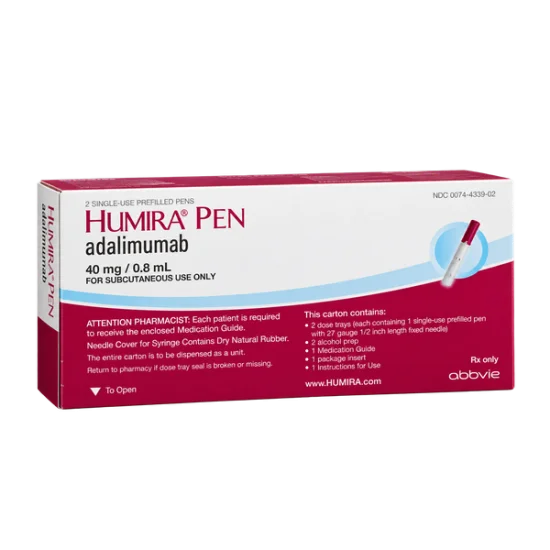
The product is supplied as a single-use prefilled pen containing adalimumab for subcutaneous use.
Dosing differs between strengths and between users, so there is no single amount that suits everyone. The pen is administered by subcutaneous injection according to the regimen selected for the specific condition.
A typical administration plan involves:
- injecting the prescribed dose under the skin;
- using the abdomen or thigh as an injection site, while avoiding the immediate area around the navel;
- rotating injection sites to reduce repeated irritation;
- allowing the pen and solution to reach a comfortable temperature before use, without heating it artificially;
- using the pen only once;
- placing the used device into an appropriate sharps container.
Do not inject into skin that is bruised, tender, hardened, scarred, red or affected by a psoriasis plaque. The outer upper arm is generally unsuitable for self-injection unless another trained person administers the dose.
The pen should be held against the skin in the position described during injection training. Removing it too early can leave part of the dose in the device. Pressing repeatedly or trying to force the pen to deliver an additional amount can cause injury and does not correct an uncertain injection.
If a scheduled dose is missed, administer it when remembered and then resume the usual schedule, unless the next planned dose is close. Do not double the dose to compensate. When the timing is unclear, the prescribing team should decide whether the next injection needs to be adjusted.
Comparison
Biologic therapies differ in their immune targets, route of administration and licensed indications. The most suitable option depends on the disease, infection history, previous treatment response and other medicines.
| Treatment category | Main immune target or action | Typical clinical distinction |
|---|---|---|
| Adalimumab | Blocks TNF-alpha | Used across joint, skin, bowel and eye inflammation |
| Etanercept | Reduces TNF signalling through a receptor-based fusion protein | Used mainly for inflammatory joint and skin disorders |
| Rituximab | Depletes selected B cells through CD20 targeting | Used for selected autoimmune diseases and some blood cancers |
| Abatacept | Reduces T-cell activation | Used for selected inflammatory arthritic conditions |
Adalimumab has broad use across several inflammatory specialties. Etanercept also targets TNF but is not interchangeable for every bowel or eye indication. Rituximab and abatacept work through different immune pathways, so their monitoring requirements and infection considerations differ.
A biologic switch may be considered when the first treatment loses effect, causes an adverse reaction or fails to control the disease. A doctor may also choose a different mechanism when the clinical pattern suggests that TNF blockade is unlikely to provide enough control.
Biosimilar adalimumab products are assessed against a reference medicine through analytical, pharmacokinetic and clinical evidence. The EMA, MHRA and FDA assess evidence that a biosimilar has no clinically meaningful difference in quality, efficacy or safety from its reference medicine. The decision to switch remains a clinical and prescribing matter.
Common mistakes
Several practical errors can reduce the benefit of treatment or increase avoidable risk:
- injecting into irritated, scarred or actively inflamed skin;
- using the same area repeatedly;
- changing the dose because symptoms improve;
- stopping treatment suddenly without a clinical plan;
- taking a missed dose twice;
- failing to report a persistent cough or fever;
- receiving a live vaccine without checking its suitability;
- allowing the pen to freeze or exposing it to direct heat;
- discarding the pen in ordinary household waste;
- forgetting to mention previous tuberculosis or hepatitis B.
Another overlooked issue is travel planning. Humira requires temperature-controlled storage, so journeys need a suitable insulated medical container and a plan that avoids freezing the pen. The medication should remain protected from light and excessive heat.
What doctors say
In clinical practice, doctors usually assess Humira by looking for a measurable change in disease activity rather than relying on a single good or bad day. For rheumatoid arthritis, this may include joint counts, morning stiffness, mobility and inflammatory markers. For inflammatory bowel disease, bowel frequency, bleeding, abdominal pain, weight and endoscopic findings may guide decisions.
A common prescribing mistake is expecting immediate relief after the first injection. Adalimumab acts on inflammatory signalling, and the treatment response is assessed over an appropriate period for the disease. Lack of improvement, worsening symptoms or new infection signs should prompt a treatment review rather than unsupervised dose changes.
Doctors also look at treatment persistence. Missing injections can allow inflammatory activity to return and may complicate interpretation of whether the medicine is working. If a dose is delayed, the patient should follow an agreed recovery plan instead of taking two injections close together.
The MHRA product information emphasises infection screening, monitoring and assessment of serious adverse reactions during adalimumab therapy [3].
Questions and answers
How should the Humira pen be cleaned and handled?
The injection site should be cleaned with an appropriate antiseptic method and allowed to dry before injection. The pen itself should not be washed, soaked or disinfected, because liquid can damage the device. The 2024 EMA product information describes Humira as a single-use prefilled pen for subcutaneous administration, with handling instructions linked to the delivery device [4]. Any damaged, leaking or previously activated pen should be set aside for assessment rather than used.
What is the correct technique for using the Humira pen?
Humira is injected under the skin, commonly into the abdomen or thigh, while avoiding the navel and areas that are bruised, scarred, painful or inflamed. The pen should be placed firmly against the skin and kept in position for the time required by the device instructions. A trained healthcare professional should demonstrate the first injections and confirm that the full dose was delivered. MHRA guidance for biologic medicines supports patient education and monitoring as part of safe administration in 2024.
Can Humira be used during pregnancy and breastfeeding?
Adalimumab may be continued during pregnancy when the expected benefit supports treatment, but the decision depends on disease activity and the individual risk assessment. The medicine can pass across the placenta, especially later in pregnancy, which may affect the timing of certain live vaccines for the infant. Small amounts may enter breast milk, and treatment may still be considered when clinically necessary. WHO immunisation principles and specialist rheumatology or gastroenterology guidance should inform vaccine planning and infant care in 2024.
What should be checked before starting Humira?
Before treatment, the clinician should assess active or previous tuberculosis, hepatitis B, recurrent infections, vaccination status, heart failure, neurological disease, cancer history and current immunosuppressive medicines. Blood tests and tuberculosis screening are commonly arranged before the first dose. The complete medicine list should include corticosteroids, biologic therapies and non-prescription products. The 2024 EMA safety information identifies serious infection and tuberculosis as key risks requiring evaluation before and during treatment.
What should be done after a missed Humira dose?
A missed dose should generally be administered when remembered, followed by the established schedule, unless the next planned dose is close. Two doses should not be injected together to compensate. The correct plan can depend on how late the injection is and on the indication being treated. The 2024 NHS guidance advises patients to seek specific guidance when they are unsure whether to inject immediately or wait until the next scheduled date [5]. This approach helps prevent accidental double dosing.
Do you offer anonymous delivery?
Your order will be securely packed and shipped within 24 hours. This is exactly what your package will look like (images of an actual item sent). It has the size and look of a regular private letter (24x11x0.7 cm) and its contents cannot be seen.
Comparison
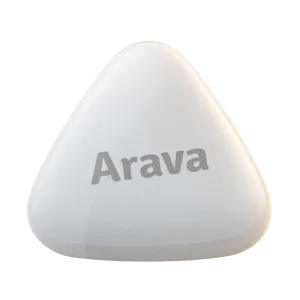
Arava
Humira Current
Humira: What Customers Say
The injections became routine after training, although the first one made me nervous. My bowel symptoms settled over time, but I had two minor colds during the first few months and contacted the clinic sooner than I normally would.
My skin became much clearer, especially on my elbows and scalp. The result was not instant, and I still had a small flare during an infection. The main difficulty was remembering the injection date when my routine changed.
Humira reduced my joint swelling but did not remove every ache. I disliked the injection-site redness at first. After the nurse showed me how to let the pen warm naturally and avoid tender skin, the reactions were less noticeable.
Sources
- European Medicines Agency (2025). Humira — Summary of Product Characteristics (adalimumab).
- NHS (2024). Adalimumab — how and when to take it, side effects, and precautions.
- MHRA (2024). Humira (adalimumab) — Summary of Product Characteristics and Patient Information Leaflet.
- European Medicines Agency (2024). Humira — Product Information and Instructions for Use.
- NHS (2024). Adalimumab — missed or delayed dose information.