I used a weight-based course for about five months after years of painful nodules along my jaw. The first few weeks brought cracked lips and a flare, then new spots became less frequent. My blood tests meant the dose was adjusted once, and the dryness settled after treatment ended.
Acne can remain severe, painful and resistant to standard treatment despite consistent skincare. Accutane contains isotretinoin, an oral retinoid prescribed for severe nodular acne and acne that has not responded adequately to other treatments. It reduces sebaceous-gland activity and helps prevent new inflammatory lesions.
About this product
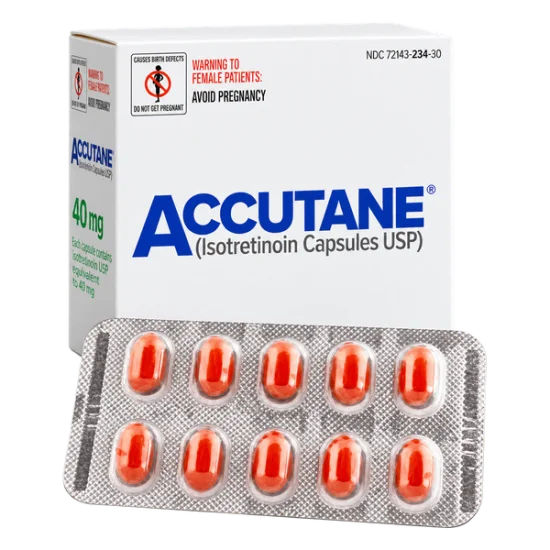
Accutane is an oral medicine containing isotretinoin, a systemic retinoid related to vitamin A. It belongs to the retinoid class and is used for severe, nodular or treatment-resistant acne.
Uses
Accutane is intended for carefully selected patients with severe acne, acne that causes scarring, or disease that has not improved sufficiently with standard topical or oral treatment.
Pharmacological action
Severe acne often involves excess sebum, sticky follicular cells, blocked pores and inflammation. Isotretinoin acts on the sebaceous glands, reducing their activity and gradually lowering oil production. As the follicle becomes less congested, fewer new comedones form and inflammatory acne can settle.
The first weeks may feel discouraging. Some patients experience an initial flare, sometimes called a purge, before the number of new lesions starts to fall. This early change does not automatically mean that treatment has failed. A marked, painful or rapidly worsening flare requires prompt review because the dose or treatment plan may need adjustment.
Isotretinoin differs from oral antibiotics and topical retinoids because it changes sebaceous-gland activity throughout the body. Topical medicines act mainly at the application site, while antibiotics reduce acne-related inflammation and bacterial activity for as long as treatment continues. The European Medicines Agency has assessed isotretinoin use through regulatory reviews focused on severe acne and pregnancy prevention [2].
Treatment does not work by instantly drying every spot. The sebaceous glands shrink gradually, and the skin may continue producing new lesions during the early phase. Visible improvement often develops over several weeks, with clearer progress later in the course.
When not to use it
- Known allergy to isotretinoin or any capsule ingredient.
- Existing liver disease or significantly abnormal liver enzymes.
- Very high blood triglycerides or cholesterol.
- Uncontrolled depression, severe mood instability or a history of serious psychiatric symptoms.
- Concurrent tetracycline treatment, because the combination may increase the risk of raised pressure around the brain.
- Use of vitamin A supplements or other retinoid medicines.
- Conditions that make regular blood testing or pregnancy-prevention monitoring impossible.
Do not combine isotretinoin with tetracycline antibiotics unless a specialist has specifically changed the treatment plan. Avoid vitamin A supplements because combined retinoid exposure may increase toxicity. Tell the prescriber about all medicines, non-prescription products and supplements before treatment begins.
When this is not for you
Accutane is not for you if you are pregnant, planning a pregnancy or unable to follow reliable pregnancy-prevention requirements. Pregnancy must be excluded before treatment, prevented reliably during treatment and avoided for the required period after the final dose. Breastfeeding is also incompatible with isotretinoin treatment.
Tell your prescriber if you have liver disease, very high cholesterol or triglycerides, serious mood problems, or if regular blood tests and pregnancy-prevention monitoring would be difficult. Do not take tetracycline antibiotics, vitamin A supplements or other retinoid medicines without specialist advice.
New depression, irritability, unusual aggression, anxiety, loss of interest or thoughts of self-harm should be reported urgently. The MHRA has issued safety information on systemic retinoids, including psychiatric and sexual-function monitoring requirements [4].
Adverse reactions
Dryness is the side effect most patients notice first. Lips may crack, facial skin may peel, the eyes may feel gritty and the nose may become dry enough to bleed. These effects reflect isotretinoin's reduction of oil production and can continue while the dose remains unchanged.
Common or clinically relevant effects include:
- Chapped lips and peeling skin.
- Dry or irritated eyes.
- Nasal dryness and nosebleeds.
- Increased sensitivity to sunlight.
- Headache.
- Muscle or joint discomfort.
- Temporary acne flare at the start.
- Changes in blood triglycerides or cholesterol.
- Changes in liver enzyme results.
- Mood changes or worsening depression in susceptible individuals.
Use a plain, fragrance-free moisturiser and lip balm from the beginning rather than waiting for cracks to appear. Contact-lens wearers may find lenses uncomfortable because of reduced tear-film lubrication. Artificial tears can help, while persistent eye pain or visual disturbance needs prompt assessment.
Sunburn can occur more easily. Use protective clothing and a high-protection sunscreen, and avoid deliberate tanning. Waxing, aggressive peels and abrasive resurfacing can injure fragile skin during treatment and for a period after it.
Rare but serious symptoms require urgent medical attention. These include severe or persistent headache with nausea or visual symptoms, marked mood change, suicidal thoughts, severe abdominal pain, yellowing of the skin or eyes, dark urine, severe allergic swelling and significant visual changes.
Isotretinoin can alter laboratory values without causing obvious symptoms. Someone may feel well while triglycerides or liver enzymes rise, which is why monitoring is part of the treatment rather than an optional extra.
What it contains
Accutane contains isotretinoin, a systemic retinoid related to vitamin A. It is supplied as oral capsules and is prescribed for severe, nodular or treatment-resistant acne. Isotretinoin acts throughout the body rather than only on the skin surface, so treatment requires planned monitoring and careful attention to pregnancy prevention.
The medicine targets several processes involved in severe acne:
- It reduces the size and activity of sebaceous glands.
- It lowers sebum production, removing an important environment for blocked pores.
- It helps normalise the shedding of cells inside hair follicles.
- It reduces the formation of comedones and inflammatory lesions.
- It can produce long-lasting improvement after one completed course.
Accutane is intended for carefully selected patients with severe acne, acne that causes scarring, or disease that has not improved sufficiently with standard topical or oral treatment. The prescribing decision depends on acne severity, previous treatment, medical history and laboratory results. The FDA prescribing information describes isotretinoin as a systemic retinoid with strict pregnancy-related restrictions [1].
One practical point is easy to miss: isotretinoin is absorbed more reliably when taken with food, especially a meal containing some dietary fat. Taking it randomly on an empty stomach can reduce the amount your body absorbs.
Dosage and administration
The amount of isotretinoin is calculated individually, usually according to body weight, acne severity, response and tolerability. It is not one fixed dose for every patient.
Typical clinical prescribing follows these principles:
- The course may begin with a lower weight-based dose.
- The prescriber may adjust the daily amount after assessing skin response and adverse effects.
- The total course is often planned around a cumulative weight-based exposure.
- A typical course lasts about four to six months, though the duration can be shorter or longer.
- Capsules are swallowed whole with food and should not be crushed, opened or chewed.
- The daily schedule should follow the prescribed regimen rather than being changed according to the appearance of individual spots.
- Blood tests may be required before treatment and during follow-up, including liver enzymes and blood lipids.
The British Association of Dermatologists and NICE acne guidance support specialist-led treatment planning for severe acne, with attention to response, adverse effects and relapse risk [3]. A prescriber may pause treatment, reduce the daily amount or extend the course when dryness, laboratory changes or other problems become clinically significant.
If a dose is missed, take it when remembered unless the next scheduled dose is close. In that situation, skip the missed dose and resume the normal schedule. Do not double the next dose.
Do not donate blood during treatment or for the specified period after stopping isotretinoin. Blood containing isotretinoin could expose a pregnant recipient to a medicine associated with serious fetal harm.
Comparison
| Approach | Main clinical role |
|---|---|
| Oral isotretinoin | Systemic treatment for severe, nodular, scarring or treatment-resistant acne |
| Oral antibiotic treatment | Shorter-term reduction of inflammatory acne, usually combined with topical treatment |
| Topical retinoid or benzoyl peroxide | Local treatment for mild to moderate acne and maintenance after improvement |
Isotretinoin is chosen when the potential benefit of a systemic course outweighs its monitoring burden. Oral antibiotics may be useful for inflammatory acne, yet prolonged antibiotic exposure is limited by resistance concerns and relapse after discontinuation. Topical treatment remains valuable for maintenance but may not control extensive nodular disease by itself.
The choice depends on scarring, lesion type, previous treatment, pregnancy potential, mental-health history, liver function and lipid results. A patient with deep nodules and recurrent scarring may need a different strategy from someone with occasional comedones.
Common mistakes
Several practical mistakes can reduce tolerability or make treatment harder to assess:
- Taking capsules without food.
- Changing the prescribed amount after one bad skin day.
- Doubling a dose after forgetting one.
- Using vitamin A supplements at the same time.
- Taking tetracyclines without reporting isotretinoin use.
- Continuing waxing or abrasive facial procedures.
- Treating severe headache or visual symptoms as ordinary dehydration.
- Ignoring mood changes because the skin is improving.
- Skipping blood tests when the skin appears better.
- Stopping contraception immediately after the last dose.
- Sharing capsules with a relative or partner.
- Giving unused capsules to another person with acne.
One less obvious problem is under-reporting sexual side effects or mood symptoms. These symptoms can be embarrassing, yet they are clinically relevant and may influence whether treatment continues.
Another mistake is assuming that severe dryness means the medicine is damaging the skin permanently. Dryness needs regular skin care. It often improves after treatment, though some effects can persist and need assessment.
What doctors say
Dermatologists generally treat isotretinoin as a planned course rather than a quick spot treatment. The aim is to suppress the acne process deeply enough to reduce active disease and the risk of further scarring, while adjusting exposure when side effects or blood-test changes appear.
A clinician will usually want clear baseline information about pregnancy potential, mental health, liver disease, lipid disorders, current medicines and previous acne treatment. The same starting amount is not suitable for every person. Body weight, lesion severity and tolerance influence the daily prescription.
Doctors also distinguish expected dryness from warning signs. Chapped lips are common and usually manageable. Severe headache with visual symptoms, profound mood change, jaundice or intense abdominal pain is different and needs prompt medical assessment.
Rapid improvement is not guaranteed. That expectation can create unnecessary worry when a few new lesions appear. Improvement is assessed by the trend over time, the number of new nodules, inflammation, scarring and treatment tolerance.
Questions and answers
Can alcohol be used during Accutane treatment?
Alcohol is best avoided or kept to a minimum during isotretinoin treatment because both alcohol and isotretinoin can affect the liver and blood lipid levels. The MHRA safety information reviewed for systemic retinoids in 2023 supports attention to liver function, triglycerides and individual risk factors. Alcohol can also worsen dehydration, headaches and poor sleep, which may make treatment symptoms harder to interpret. Anyone with abnormal liver tests or elevated triglycerides should discuss alcohol intake directly with the prescribing team. The prescriber can tailor advice to liver tests and lipid results.
What happens after stopping Accutane, and is tapering required?
Isotretinoin is usually stopped when the planned course or cumulative exposure has been completed, rather than tapered in the same way as some medicines affecting the nervous system. Acne may continue improving for a period after the final capsule because sebaceous-gland activity does not return instantly. The EMA's 2018 pregnancy-prevention requirements remain relevant after stopping, including the specified waiting period before pregnancy. A sudden recurrence of severe nodules should be assessed rather than treated by restarting leftover capsules.
Should Accutane be taken with food or on an empty stomach?
Accutane should be taken with food, following the prescribed schedule. A meal containing some fat generally supports absorption better than taking the capsule on an empty stomach. FDA pharmacology information reviewed in 2022 describes food-related differences in isotretinoin absorption, which is why meal timing matters. If nausea occurs, taking the capsule during the main meal may be more comfortable than taking it before eating.
Which diet, exercise or habits help or hinder the result?
No special acne diet guarantees a response, but regular meals, adequate hydration and a consistent skin routine can make treatment easier to tolerate. Harsh cleansing, deliberate tanning, waxing and aggressive exfoliation can worsen irritation. The WHO's 2020 Guidelines on Physical Activity and Sedentary Behaviour support moderate physical activity, while intense exercise should be reduced if muscle or joint pain becomes significant. Avoid vitamin A supplements and tell the prescriber about high-dose nutritional products.
Can Accutane be combined with tetracycline antibiotics or vitamin A supplements?
Accutane should not be combined with tetracycline antibiotics because the combination may increase the risk of intracranial hypertension, which can present with severe headache or visual symptoms. Vitamin A supplements and other retinoids should also be avoided because combined exposure can intensify retinoid toxicity. NICE acne guidance published in 2021 supports careful selection of systemic acne treatment and avoidance of unsafe combinations. Check every supplement and medicine for vitamin A or tetracycline content before starting it.
How long does an Accutane course last, and is long-term use acceptable?
A typical course lasts around four to six months, but the prescriber determines the duration from body weight, daily dose, cumulative exposure, response and laboratory results. Long-term continuous use is not routine because isotretinoin requires ongoing assessment and carries important pregnancy, psychiatric, liver and lipid risks. The EMA's isotretinoin safety review in 2018 supports structured treatment with pregnancy prevention and monitoring rather than indefinite self-directed use. Recurrence after a completed course may require a new dermatology assessment, not automatic continuation of old capsules.
Do you offer anonymous delivery?
Your order will be securely packed and shipped within 24 hours. This is exactly what your package will look like (images of an actual item sent). It has the size and look of a regular private letter (24x11x0.7 cm) and its contents cannot be seen.
Comparison
Accutane Current
Diane 35
Accutane: What Customers Say
The acne improved, but the early stage was harder than I expected. My eyes felt gritty when I worked at a screen, and I needed lubricating drops. I was pleased with the result, although I would not have continued without regular checks because my triglycerides rose.
I took capsules with my evening meal and saw gradual improvement over several months. The first month was disappointing because new lesions still appeared. Moisturiser and lip balm helped, but I disliked the sun sensitivity and had to change my outdoor routine.
Sources
- U.S. Food and Drug Administration (2009). Accutane (isotretinoin) Capsules — Prescribing Information.
- European Medicines Agency (2018). Isotretinoin — Article 31 referral: measures to prevent pregnancy and neuropsychiatric risk.
- National Institute for Health and Care Excellence (2021). Acne vulgaris: management (NICE guideline NG198).
- Medicines and Healthcare products Regulatory Agency (2023). Systemic retinoids: revised and strengthened safety measures.