Skip to content
Save up to 80%
Diane 35
Active ingredient: Ethinylestradiol

Diane 35

Quality products
24/7 Support
Fast delivery
Delivery from 4 days
Select pack Package Per tablet Price

Free delivery on orders from £ 200.00, free express delivery from £ 300.00

Secure Payments
Track your order
Best price guarantee

Cyproterone acetate, the anti-androgen component of Diane 35, is combined with ethinylestradiol to treat women with androgen-related acne, excessive hair growth, or other signs of androgenisation. The combination reduces androgen activity and provides hormonal regulation when a clinician considers it appropriate.

About this product

Diane 35 tablets contain cyproterone acetate and ethinylestradiol. Together, they suppress androgen effects and provide contraceptive action during treatment. Diane 35 is a prescription-only medicine in the UK and should be started only after an individual assessment of thromboembolic and other risk factors.

Uses

Diane 35 is prescribed for women with moderate-to-severe androgen-related symptoms, especially when topical treatment or other approaches have not provided sufficient control. The main clinical targets include:

  • Hormonal acne: acne linked to androgen stimulation of sebum production and blocked pores.
  • Hirsutism: excessive terminal hair growth in areas such as the face, chest, or abdomen.
  • Androgenisation: physical signs associated with raised androgen activity, including oily skin, persistent acne, or increased facial hair.
  • Polycystic ovary syndrome (PCOS): a condition that may involve irregular periods, acne, hirsutism, and excess androgen activity.
  • Irregular periods: menstrual cycles affected by hormonal imbalance may become more predictable during treatment.
  • Excessive hair growth: hair growth usually slows gradually rather than disappearing immediately.

Diane 35 does not treat every form of acne or every cause of irregular menstruation. A clinician usually considers the pattern of symptoms, menstrual history, examination findings, and risk factors before prescribing it.

Management of androgen-driven dermatological symptoms

Cyproterone acetate reduces androgen stimulation at the receptor level. This can lower sebum output and reduce the hormonal drive behind some forms of acne. The effect on facial or body hair is slower because existing hairs must complete their growth cycle before changes become noticeable.

Patients may need several months before the full dermatological benefit becomes clear. Hair removal methods may still be needed while treatment is working. New hair growth can become finer or slower, but Diane 35 does not permanently remove established hair follicles.

Pharmacological action

Cyproterone acetate acts in two main ways. It blocks androgen receptors, reducing the ability of testosterone and related hormones to stimulate the skin, hair follicles, and sebaceous glands. It also has progestogenic activity that contributes to suppression of ovarian androgen production.

Ethinylestradiol supports the hormonal action of the combination by suppressing pituitary signals that stimulate the ovaries. Lower ovarian androgen production complements cyproterone acetate’s receptor blockade. The result is reduced androgen activity from both the hormone-production and hormone-receptor sides.

A simple pharmacological pathway is:

Ethinylestradiol → reduced ovarian stimulation → lower androgen production

Cyproterone acetate → androgen-receptor blockade → reduced skin and hair-follicle response

This dual action explains why Diane 35 can help androgen-related acne and hirsutism while also producing predictable withdrawal bleeding during the tablet cycle. Its hormonal effects also prevent ovulation, but treatment selection should be based on the medical indication rather than contraception alone.

The European Medicines Agency reviewed cyproterone acetate and ethinylestradiol medicines in relation to venous thromboembolism risk and their use in androgen-dependent conditions [1]. The MHRA has also stressed that this treatment should be reserved for appropriate clinical indications and reviewed regularly [2].

When not to use it

Diane 35 is not suitable for everyone. Diane 35 is NOT for you if a clinician identifies a contraindication such as a current or previous clot, migraine with aura, or severe uncontrolled hypertension. It should generally be avoided or carefully assessed in people with:

  • current or previous deep-vein thrombosis, pulmonary embolism, stroke, or heart attack;
  • known thrombophilia or a strong family history of early thrombosis;
  • migraine with aura;
  • severe uncontrolled hypertension;
  • significant liver disease or liver tumours;
  • unexplained vaginal bleeding;
  • hormone-sensitive cancers where oestrogen or progestogenic activity is unsuitable;
  • pregnancy or suspected pregnancy;
  • severe diabetes-related vascular disease;
  • smoking combined with additional cardiovascular risk factors.

Medicines that can reduce hormonal contraceptive reliability include enzyme-inducing treatments such as certain medicines for epilepsy, tuberculosis, HIV infection, and some herbal preparations containing St John’s wort. Some antibiotics do not reduce contraceptive protection, but enzyme-inducing antibiotics require a specific plan.

Tell the prescriber about anticoagulants, medicines for epilepsy, antiretroviral treatment, medicines for hepatitis C, diabetes treatments, and herbal products. Liver-enzyme induction can lower hormone concentrations, while hormonal treatment can alter the handling of some other medicines.

When this is not for you

Diane 35 is NOT for you if a clinician identifies a contraindication such as a current or previous clot, migraine with aura, or severe uncontrolled hypertension.

Adverse reactions

Some adverse effects are related to hormonal changes and may settle as the body adapts. Possible effects include:

  • nausea or abdominal discomfort;
  • headache;
  • breast tenderness;
  • mood changes;
  • changes in menstrual bleeding;
  • fluid retention;
  • reduced or increased libido;
  • skin changes.

Seek urgent medical assessment for one-sided leg swelling or pain, sudden breathlessness, chest pain, coughing blood, sudden weakness, facial drooping, speech difficulty, severe abdominal pain, or a sudden severe headache. These symptoms can indicate venous thromboembolism, stroke, or another serious complication.

The risk of venous thromboembolism is higher with combined hormonal medicines than without them. It is also affected by age, smoking, obesity, prolonged immobility, surgery, inherited clotting disorders, and a personal or family history of thrombosis. The MHRA’s safety review identified venous thromboembolism as a central risk requiring careful patient selection [3]. The U.S. Food and Drug Administration (FDA) also warns about thromboembolic risks with combined hormonal products.

Mood symptoms deserve attention. Persistent depression, severe anxiety, or thoughts of self-harm require prompt clinical contact. Do not wait for a routine review if mental health symptoms become intense.

Before planned surgery or a period of prolonged immobility, tell the treating team that you use an oestrogen-containing medicine. The clinician may need to plan temporary interruption or additional clot-risk measures.

A practical detail is often missed: spotting during the first cycles does not necessarily mean that the medicine has failed. Bleeding that becomes heavy, prolonged, or associated with dizziness needs medical assessment.

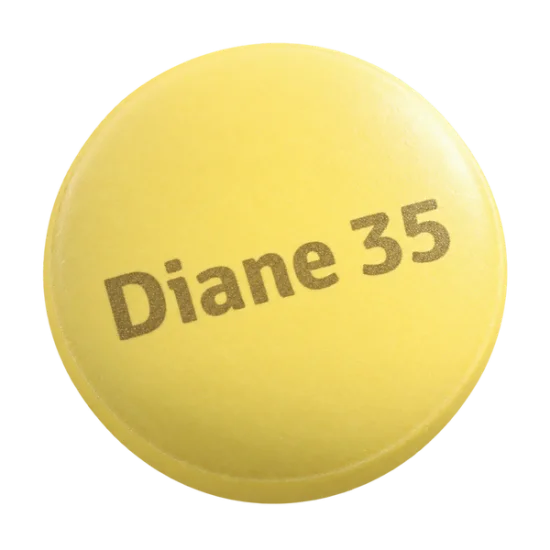
What it contains

The active components are:

  • Cyproterone acetate: blocks androgen receptors and reduces androgen-driven effects in the skin and hair follicles.
  • Ethinylestradiol: provides oestrogenic activity and reduces ovarian androgen stimulation.
  • Pharmaceutical class: combined hormonal anti-androgen therapy.
  • Dosage form: oral tablets.
Tell the prescriber about migraine with aura, previous blood clots, smoking, high blood pressure, and close relatives who developed thrombosis at a young age. These details can change whether an oestrogen-containing treatment is appropriate.

Dosage and administration

The amount used and the frequency depend on the purpose of treatment and are agreed with a doctor or pharmacist. Diane 35 is taken orally as tablets according to the prescribed cycle.

Key administration points include:

  • Take one tablet at the prescribed time each day during the active-tablet phase.
  • Swallow the tablet with water.
  • Follow the prescribed tablet-free interval before beginning the next cycle.
  • If vomiting or severe diarrhoea occurs soon after a dose, contraceptive protection may be reduced because absorption can be incomplete.
  • If a tablet is missed, follow the missed-dose instructions supplied with the prescription rather than taking several tablets together without advice.
  • Do not extend treatment indefinitely without a review.
Taking the tablet at the same time each day, such as after brushing your teeth in the evening, can reduce missed doses. A phone reminder is useful when work shifts or travel disrupt the usual routine.

Crushing or splitting tablets can make accurate dosing harder and is unnecessary for this oral dosage form. A missed dose should not routinely be “replaced” by doubling later doses because the correct action depends on how late the tablet was taken and where the patient is in the cycle.

Comparison

Approach Main action Typical role
Diane 35 Anti-androgen plus oestrogenic hormonal suppression Androgen-related acne, hirsutism, and associated hormonal symptoms
Topical dermatological treatment Acts mainly at the skin surface Local acne treatment with limited systemic hormone effects
Non-oestrogen anti-androgen approach Reduces androgen effects through a different systemic pathway Selected patients when an oestrogen-containing regimen is unsuitable

Diane 35 may be preferred when acne or hirsutism occurs alongside irregular periods or other signs of androgenisation. A topical approach may be more suitable for mild, localised acne. A non-oestrogen option may be considered when clotting risk, migraine pattern, or other medical factors make combined hormonal treatment unsuitable.

The trade-off is clear: Diane 35 can address several androgen-related symptoms at once, yet it carries oestrogen-related risks that topical treatment does not. The treatment choice therefore depends on the whole clinical picture, not acne severity alone.

Common mistakes

Several patterns can reduce benefit or increase risk:

  • Continuing Diane 35 solely for contraception after the original androgen-related indication has resolved.
  • Assuming that more tablets will speed improvement in acne or hair growth.
  • Stopping after a few weeks because existing facial hair has not changed.
  • Ignoring a new migraine with aura because previous headaches were mild.
  • Continuing treatment despite one-sided calf swelling, sudden breathlessness, or chest pain.
  • Forgetting to mention St John’s wort or epilepsy treatment.
  • Treating heavy or persistent breakthrough bleeding as something that must simply be endured.
  • Restarting after a long break without a fresh review of clotting and cardiovascular risks.
  • Taking doses at unpredictable times and then doubling doses after a missed tablet.
Keep a brief record of headaches, bleeding changes, mood symptoms, and skin response during the first cycles. This gives the prescriber useful information without relying on memory at the review appointment.

What doctors say

In clinical practice, doctors usually set two expectations early: skin improvement takes time, and risk review is part of every continuation decision. Acne may respond before unwanted facial hair changes, because hair follicles have a longer growth cycle.

A clinician will also distinguish cosmetic improvement from treatment of the underlying hormonal pattern. Diane 35 can reduce androgen-related symptoms, but it does not remove every cause of PCOS, and it does not permanently cure hirsutism.

Treatment reviews often consider blood pressure, new migraine symptoms, smoking status, mood, menstrual pattern, and symptoms of thrombosis. The appearance of new warning signs matters more than simply counting how many tablets remain.

The EMA’s assessment of cyproterone acetate-containing medicines supports restricting higher-exposure cyproterone treatment to appropriate indications because of meningioma risk associated with cumulative exposure [4]. This is one reason clinicians avoid unnecessary long-term use and reassess whether treatment remains needed.

Questions and answers

Can people under 18 use Diane 35?

Diane 35 may be prescribed to some post-pubertal adolescents when severe androgen-related acne or hirsutism requires hormonal treatment, but age alone does not determine suitability. The clinician will assess menstrual development, migraine history, blood pressure, clotting risk, and the severity of the indication. MHRA safety guidance published in 2013 supports restricting cyproterone acetate and ethinylestradiol treatment to appropriate clinical use. A parent or guardian may be involved in the decision according to the young person’s circumstances and local clinical practice.

How long does a course last, and is long-term use acceptable?

Treatment duration depends on symptom severity, response, adverse effects, and whether the original indication remains present. Acne may require several cycles before a clear change appears, while hirsutism generally takes longer because hair growth is slow. Long-term use is not automatically appropriate; the need for continuation should be reassessed periodically. EMA safety information from 2013 supports using cyproterone-containing combinations only when the expected benefit continues to justify exposure.

Can older adults use Diane 35?

Diane 35 is generally not a routine treatment for older adults because cardiovascular and thromboembolic risks increase with age, while new androgen-related symptoms may need investigation for another cause. A clinician would review blood pressure, smoking, migraine, liver health, cancer history, and other medicines before considering treatment. New acne, excess hair, or menstrual changes later in life should receive an appropriate medical assessment. WHO medical eligibility guidance published in 2024 places strong emphasis on age-related vascular risk when considering combined hormonal medicines.

Can Diane 35 affect driving, concentration, or work with machinery?

Diane 35 does not usually impair driving or machine operation directly, but headache, dizziness, nausea, visual symptoms, or mood changes can make these activities unsafe for an individual. Do not drive or operate machinery if vision changes, faintness, or severe headache develops. Sudden neurological symptoms require urgent medical assessment rather than simply taking a break from work. MHRA safety information from 2013 highlights the need for prompt evaluation of symptoms that could indicate a serious vascular event.

Can Diane 35 be taken with food or on an empty stomach?

Diane 35 tablets can generally be taken with or without food, provided they are taken consistently at the prescribed time. Taking a tablet with food may reduce nausea for some people, although food does not remove the risk of serious hormonal adverse effects. Vomiting or severe diarrhoea soon after a dose can interfere with absorption and may require missed-dose precautions. The 2013 EMA product information for cyproterone acetate and ethinylestradiol medicines describes oral administration and the need to consider gastrointestinal absorption problems.

What should happen if the expected result does not come?

Do not increase the dose or take tablets more frequently when acne, hirsutism, or irregular bleeding persists. The prescriber may need to confirm the diagnosis, review adherence, assess other causes of androgen excess, or choose a different treatment approach. Existing hair may remain even when new growth slows, so the timing of assessment matters. NICE guidance on acne management, reviewed in 2023, supports reassessing treatment when the expected response is absent or inadequate.

What should be checked before starting Diane 35?

The prescriber should review personal or family thrombosis history, migraine with aura, blood pressure, smoking, obesity, planned surgery, liver disease, pregnancy possibility, and medicines that induce liver enzymes. Discuss epilepsy treatment, tuberculosis treatment, HIV or hepatitis C medicines, St John’s wort, anticoagulants, and any previous hormone intolerance. New or unexplained androgenisation may need further investigation before treatment begins. The MHRA’s 2013 safety communication and EMA’s 2013 review both support individual risk assessment before prescribing.

Do you offer anonymous delivery?

Your order will be securely packed and shipped within 24 hours. This is exactly what your package will look like (images of an actual item sent). It has the size and look of a regular private letter (24x11x0.7 cm) and its contents cannot be seen.

Comparison

Comparison table: Acne

Diane 35: What Customers Say

3.3
Based on 5 reviews
Megan D., 47 Swansea Several months
Verified
Rating: 3.5 out of 5

My jawline acne became less inflamed after the second cycle, and my skin was less oily. I had breast tenderness at first, which settled, but I needed regular reviews because I also smoked.

30 Oct 2026
Julie, 67 Bath Several months earlier in life
Verified
Rating: 3.5 out of 5

I used it when hormonal acne was affecting my confidence. The improvement was gradual rather than dramatic, and I remember feeling mildly nauseated during the first weeks.

1 Oct 2026
Amanda, 64 Liverpool A few months
Verified
Rating: 3 out of 5

After a few months, I noticed fewer dark hairs appearing on my chin. Existing hairs still needed removal, so it was helpful but not a complete solution.

6 Oct 2026
Wendy, 50 Plymouth Several months
Verified
Rating: 3 out of 5

My periods became more predictable, but I developed headaches that were different from my usual tension headaches. My prescriber stopped the treatment and reviewed other options.

14 Oct 2026
Joanne D., 45 Oxford Several months
Verified
Rating: 3.5 out of 5

My skin improved after several cycles, and the oily feeling reduced. I disliked the spotting early on, although it became less troublesome later.

25 Oct 2026

Sources

  1. European Medicines Agency (2013). Cyproterone acetate and ethinylestradiol-containing medicines: review of venous thromboembolism risk.
  2. MHRA (2013). Diane 35 and its generics: risk of venous thromboembolism.
  3. MHRA (2013). Combined hormonal contraceptives: updated advice on the risk of blood clots.
  4. European Medicines Agency (2013). Cyproterone-containing medicinal products: review of meningioma risk.
Get our free app Shop faster and track your orders Install