Cramping began within a few hours and the first evening was uncomfortable. I had chills but no lasting fever. The follow-up appointment confirmed that the process was complete.
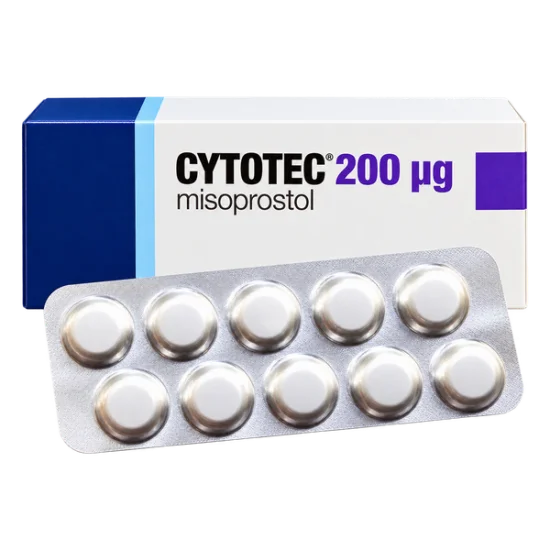
Cytotec tablets contain 200 micrograms of misoprostol and are used by the route selected for the clinical indication. The medicine is prescribed for protection against NSAID-related ulcers and for specialist obstetric or gynaecological care. Misoprostol is a prostaglandin E1 analogue that strengthens gastric defences and stimulates changes in the cervix and uterus.
About this product
Cytotec contains misoprostol, a synthetic analogue of prostaglandin E1. The active substance belongs to the anti-ulcer medicines and prostaglandin analogue classes.
Uses
The medicine is prescribed for protection against NSAID-related ulcers and for specialist obstetric or gynaecological care.
Obstetric indications and cervical preparation
Misoprostol is used in obstetric practice for cervical ripening and induction of labour under a defined clinical protocol. Cervical ripening means that the cervix becomes softer, shorter, and more ready to open. The process may be needed when labour has not started spontaneously or when continuing the pregnancy presents a medical concern.
Gynaecological procedures and pregnancy-loss care
Misoprostol is used in specialist gynaecology for medical management of early pregnancy loss and termination of pregnancy. It may be used alone or after mifepristone, depending on gestational age, local clinical guidance, and the treatment pathway selected by the medical team.
The cervix is assessed before treatment, and uterine activity and fetal wellbeing are monitored during the induction pathway [3].
The WHO Abortion care guideline describes misoprostol-based regimens and follow-up principles for early medical abortion and management of incomplete or missed abortion [2].
Pharmacological action
Misoprostol is a prostaglandin E1 analogue that strengthens gastric defences and stimulates changes in the cervix and uterus. In the stomach, it increases protective mucus and bicarbonate while reducing acid secretion. In the uterus and cervix, it can soften cervical tissue and stimulate uterine contractions. These effects explain why the same active ingredient has gastrointestinal, obstetric, and gynaecological applications.
When not to use it
Cytotec is not suitable for everyone. It should not be used during an ongoing pregnancy for ulcer prevention because misoprostol can stimulate uterine contractions and cause miscarriage, premature labour, or fetal harm.
- A known allergy to misoprostol or another prostaglandin analogue.
- An ectopic pregnancy or possible ectopic pregnancy without specialist treatment.
- Unexplained severe pelvic pain or heavy vaginal bleeding without assessment.
- A significant uterine scar when the proposed obstetric protocol has not been reviewed by a maternity specialist.
- A condition requiring urgent surgery.
Misoprostol does not treat ectopic pregnancy. A pregnancy outside the uterus can rupture and cause life-threatening internal bleeding, even when vaginal bleeding is limited.
Non-steroidal anti-inflammatory drugs do not cancel misoprostol’s effects. The medicines may be prescribed together for ulcer prevention, but the purpose of the combination is to reduce NSAID-related gastric injury, not to make high-dose or prolonged NSAID use risk-free.
When this is not for you
Cytotec is not for you if
- You are pregnant and the intended treatment is gastric protection rather than a supervised obstetric or gynaecological indication.
- You have a known allergy to misoprostol or another prostaglandin analogue.
- You have been advised that a pregnancy is ectopic or may be ectopic and have not received specialist treatment.
- You have unexplained severe pelvic pain or heavy vaginal bleeding without assessment.
- You have a significant uterine scar and the proposed obstetric protocol has not been reviewed by a maternity specialist.
- You have a condition requiring urgent surgery but are attempting to manage it with tablets alone.
Tell the prescribing team about anticoagulants, medicines that affect uterine activity, corticosteroids, allergy treatments, herbal products, and any medicine used for hypertension or pain.
Adverse reactions
Misoprostol can cause gastrointestinal and systemic effects because prostaglandin receptors are present throughout the digestive system and other tissues. The adverse-effect profile also changes according to the indication and route.
Common reactions include:
- Abdominal cramping or abdominal pain
- Diarrhoea
- Nausea or vomiting
- Headache
- Dizziness
- Chills or transient fever
- Uterine bleeding when used for obstetric or gynaecological purposes
Diarrhoea can appear suddenly after oral administration. Small, frequent sips of fluid may help maintain hydration when symptoms are mild. Persistent vomiting can interfere with oral treatment and needs clinical advice.
The FDA prescribing information for Cytotec identifies uterine contractions, cervical changes, gastrointestinal effects, and pregnancy-related risks as important safety considerations [1]. Severe uterine hyperstimulation can cause fetal compromise or uterine rupture. Immediate clinical assessment is required for soaking-heavy bleeding, collapse, severe or one-sided abdominal pain, persistent fever, foul-smelling discharge, or pain that is increasing rather than easing.
One practical detail is easily missed: chills can occur without infection after misoprostol, but chills do not rule out infection. The duration, temperature, general condition, and presence of pelvic pain or offensive discharge determine how concerning the symptom is.

What it contains
Cytotec contains misoprostol, a synthetic analogue of prostaglandin E1. Each tablet contains 200 micrograms of misoprostol. The active substance belongs to the anti-ulcer medicines and prostaglandin analogue classes.
Active ingredient properties
Misoprostol is absorbed rapidly after administration, with the body converting it into the active metabolite misoprostol acid. The speed and intensity of its effects vary with the route used. Oral, buccal, sublingual, and vaginal administration can produce different pharmacokinetic profiles, so the route must match the medical purpose.
Dosage and administration
- Dose: the amount taken at each intake is determined individually for each person and the clinical indication.
- Frequency: the number of times per day is determined by the prescribed clinical protocol and is not one fixed schedule for all uses.
- Timing: take or use the medicine according to the prescribed regimen; meal timing is not specified in the available product information.
- Duration: treatment duration is determined by the clinical indication and specialist protocol.
- Route: use the tablets by the route selected for the clinical indication, such as oral or another clinically prescribed route; do not change the route without medical direction.
Comparison
Misoprostol, dinoprostone, and oxytocin can all appear in induction-of-labour protocols, but they are not equivalent treatments. Dinoprostone is prostaglandin E2, while misoprostol is a prostaglandin E1 analogue. Cervidil is a controlled-release dinoprostone product used for cervical ripening in some settings.
| Medicine or class | Main clinical role | Key practical distinction |
|---|---|---|
| Misoprostol | Cervical ripening, uterine contractions, selected gynaecological protocols | Stable tablet formulation; dose and route require individual selection |
| Dinoprostone / Cervidil | Cervical ripening | Prostaglandin E2 activity; some formulations allow removal if uterine activity becomes excessive |
| Oxytocin | Strengthening established uterine contractions | Usually given by controlled intravenous infusion with continuous monitoring |
Evidence reviewed by the Cochrane Collaboration has found that misoprostol can be an effective cervical-ripening option, but adverse uterine stimulation remains a key limitation and protocols must control the amount and timing [4]. Oxytocin is more commonly used after cervical ripening or when contractions need titration. Dinoprostone may be preferred when clinicians want a formulation with a different pharmacological profile or the option to discontinue exposure rapidly.
The best choice depends on cervical assessment, fetal position, gestational age, previous uterine surgery, parity, and the local maternity protocol. A medicine that is suitable for one induction pathway may be unsuitable in another.
Common mistakes
Several mistakes make Cytotec treatment less predictable:
- Using a regimen intended for a different indication.
- Taking an additional amount because bleeding has not started quickly.
- Changing oral, buccal, sublingual, or vaginal administration without clinical instruction.
- Taking the tablets during an unassessed pregnancy when the intended purpose is ulcer prevention.
- Ignoring a history of caesarean birth or other uterine surgery.
- Assuming every episode of fever or chills is harmless.
- Failing to arrange follow-up after treatment for pregnancy loss or termination.
- Taking anti-inflammatory medicines for worsening pain without considering ulcer, bleeding, or kidney risks.
- Driving when dizziness, faintness, heavy bleeding, or severe cramping is present.
A missed intake should not automatically be doubled. The correct response depends on the indication, the timing of the regimen, and whether treatment is being used for ulcer prevention, labour, pregnancy loss, or termination.
What doctors say
In clinical practice, doctors treat misoprostol as an indication-specific medicine rather than a single-purpose tablet. The same active ingredient can protect the stomach in one regimen and produce powerful uterine effects in another.
A maternity clinician would usually focus on three points: whether the pregnancy and placenta have been assessed, whether the uterus has a scar, and how monitoring will be provided if contractions become too frequent. In gastrointestinal care, the emphasis shifts to NSAID exposure, ulcer history, diarrhoea, and adherence.
The expected response is not judged by cramping alone. In pregnancy-related care, clinicians assess bleeding, pain, vital signs, pregnancy tissue, cervical findings, and, when indicated, ultrasound or laboratory results. Continuing pregnancy symptoms after treatment may require follow-up testing.
The MHRA and EMA recognise the need for clear prescribing information around medicines that affect pregnancy and uterine activity. Practical prescribing therefore includes a defined indication, a route, an individually selected amount, and instructions for escalation if symptoms become severe.
Questions and answers
Can Cytotec be used during pregnancy or breastfeeding?
Misoprostol can cause uterine contractions and pregnancy loss, so it must not be used for gastric protection during pregnancy. In obstetric and gynaecological care, it may be used under a defined clinical protocol when the indication has been assessed. The FDA Cytotec prescribing information, issued in 2009, describes pregnancy-related warnings and the need to avoid unintended exposure. Breastfeeding advice depends on the indication, timing, dose, and the infant’s health, so the treating service should provide the specific interruption or continuation plan.
How soon does the effect of Cytotec become noticeable?
The timing depends on the route, the indication, and the individual response. Gastrointestinal effects such as diarrhoea or cramping may occur relatively soon after administration, while cervical change or completion of pregnancy-related treatment can take longer. The WHO guidance published in 2022 explains that bleeding and cramping patterns vary across misoprostol-based reproductive-health protocols . Lack of immediate bleeding does not justify taking an extra amount without clinical instruction.
Can Cytotec affect driving, concentration, or work with machinery?
Dizziness, headache, abdominal pain, diarrhoea, chills, and heavy bleeding can reduce concentration and physical safety. Do not drive or operate machinery while feeling faint, sedated, severely unwell, or unable to predict the intensity of cramps or bleeding. NICE induction guidance NG207, published in 2021, places emphasis on clinical monitoring when misoprostol is used for labour because uterine activity can change quickly. After gastrointestinal treatment, avoid driving until any dizziness or visual disturbance has settled.
Can Cytotec be combined with NSAIDs or other medicines?
Misoprostol is specifically used with NSAIDs in some ulcer-prevention regimens because it counteracts several harmful effects of NSAID exposure on the stomach lining. It does not remove the kidney, cardiovascular, or bleeding risks associated with NSAIDs. Medicines that influence uterine activity, anticoagulants, and products affecting bleeding require individual review before obstetric or gynaecological use. The route and amount should remain unchanged unless the prescribing clinician gives a new plan. The FDA Cytotec prescribing information, issued in 2009, supports individual review of the regimen and concomitant medicines.
Is alcohol compatible with Cytotec?
Alcohol can worsen nausea, diarrhoea, dizziness, dehydration, and impaired judgement during misoprostol treatment. It may also make it harder to recognise the seriousness of heavy bleeding or worsening abdominal pain. Avoid alcohol during treatment for pregnancy loss, termination, cervical preparation, or labour induction. For ulcer-related treatment, alcohol can aggravate gastric irritation even when misoprostol is being used to protect the stomach. The FDA Cytotec prescribing information, issued in 2009, lists gastrointestinal effects that can overlap with alcohol-related symptoms.
Do you offer anonymous delivery?
Your order will be securely packed and shipped within 24 hours. This is exactly what your package will look like (images of an actual item sent). It has the size and look of a regular private letter (24x11x0.7 cm) and its contents cannot be seen.
Comparison
Cytotec Current
Dexilant
Dulcolax
Cytotec: What Customers Say
The tablets reduced the stomach irritation I had been getting. Diarrhoea was the main problem during the first week, so the timing around work mattered.
The bleeding was heavier than I expected and I felt dizzy when I stood up. The clinic told me to attend urgently, and I was glad I had not tried to wait it out.
I tolerated it better with food, but I still had loose stools on some days. It helped me continue the prescribed anti-inflammatory treatment, although the stomach symptoms did not disappear immediately.
Sources
- U.S. Food and Drug Administration (2009). Cytotec (misoprostol) tablets prescribing information.
- World Health Organization (2022). Abortion care guideline.
- National Institute for Health and Care Excellence (2021). Inducing labour: NICE guideline NG207.
- Cochrane Collaboration (2014). Oral misoprostol for induction of labour.