I considered fenbendazole after reading about laboratory cancer research. I did not start it because I was already receiving prescribed treatment and could not find a validated human dose.
Fenbendazole
Its established pharmacology concerns parasite tubulin and energy uptake, while human oncology use remains unvalidated and should not be inferred from laboratory findings. Fenbendazole acts against susceptible nematodes and some other gastrointestinal parasites.
About this product
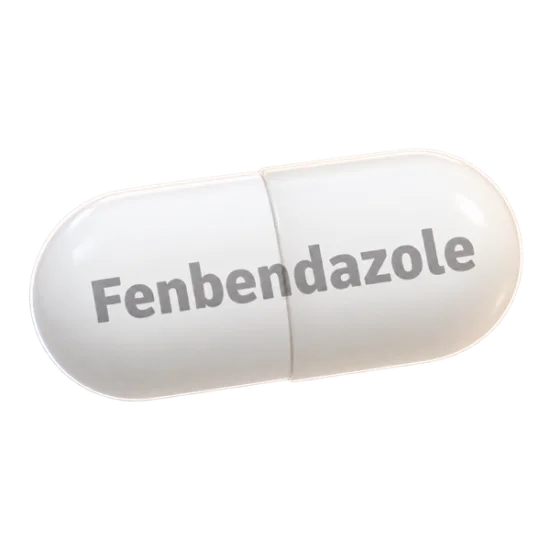
Fenbendazole, the active substance named for Fenbendazole capsules, is a benzimidazole anthelmintic used in veterinary medicine against gastrointestinal parasites.
Uses
Veterinary indications can include susceptible:
- Roundworms, including several Toxocara and Toxascaris species
- Hookworms, including Ancylostoma species
- Whipworms, including Trichuris vulpis in dogs
- Certain lungworms
- Some tapeworms or other parasites, depending on the animal species and local product authorisation
The exact parasite response depends on species, parasite sensitivity and the veterinary formulation used. A veterinary clinician selects treatment after considering the animal’s age, weight, pregnancy status, liver function, concurrent medicines and diagnostic findings.
Fenbendazole acts against susceptible nematodes and some other gastrointestinal parasites. Its veterinary role is strongest when the parasite has been identified or when a veterinarian has assessed the likelihood of infection from clinical signs, exposure and local parasite patterns.
In dogs, persistent diarrhoea, weight loss, a rough coat or poor growth can have many causes besides worms. In horses and livestock, parasite control also requires attention to resistance, pasture management and treatment intervals. Repeated anthelmintic use without testing can select resistant parasite populations.
Fenbendazole does not cover every parasite. It should not be assumed to treat protozoal infections, bacterial diarrhoea or viral disease. Clinical signs that continue after an anthelmintic course need reassessment rather than repeated dosing.

Pharmacological action
Benzimidazole anthelmintics act by binding to parasite β-tubulin. This interferes with microtubule formation, a cellular process needed for movement, intracellular transport and maintenance of the parasite’s intestinal cells.
The resulting disruption reduces glucose uptake and impairs the parasite’s energy metabolism. Glycogen stores become depleted, cellular transport fails and the parasite gradually loses its ability to maintain essential functions. The effect is directed at susceptible parasites rather than being an instant paralytic response.
Microtubules are microscopic protein structures that help cells maintain shape and transport materials. Fenbendazole’s interaction with parasite tubulin explains why its activity is pharmacologically different from medicines that affect human nerve signalling or muscle contraction.
Research into benzimidazole compounds has also examined effects on mammalian cells, including tubulin-related pathways. Laboratory activity does not establish a useful or tolerable human dose. The concentration that affects cancer cells in a dish may be unattainable in humans, or it may cause unacceptable toxicity before producing a therapeutic effect.
The US Food and Drug Administration’s veterinary information on fenbendazole describes its role as an animal anthelmintic rather than a routine human treatment [1].
When not to use it
Fenbendazole is not an appropriate self-treatment for people who:
- Are pregnant or trying to conceive
- Are breastfeeding
- Have active liver disease, unexplained abnormal liver tests or previous drug-induced hepatitis
- Are receiving chemotherapy, immunotherapy, targeted cancer therapy or radiotherapy
- Take anticoagulants, anticonvulsants, transplant medicines or several medicines processed by the liver
- Have a history of severe medicine allergy
- Are considering it for cancer, chronic infection or unexplained weight loss without a confirmed diagnosis
When this is not for you
Children and older adults require extra caution because drug handling, organ reserve and interaction risk may differ from those of healthy adults. The same principle applies to people with kidney disease, although the main concern with fenbendazole is often hepatic exposure.
A person who has already taken fenbendazole and develops jaundice, severe abdominal pain, repeated vomiting or confusion needs urgent medical evaluation. Blood tests may include liver enzymes, bilirubin, clotting markers and a full medication review.
Adverse reactions
Veterinary studies and clinical reports indicate that fenbendazole can affect the liver in susceptible settings. Human case reports have described liver injury after self-administration, including acute hepatitis. Jaundice, dark urine, pale stools, marked nausea, right-upper-abdominal pain or unusual itching require urgent medical assessment.
Gastrointestinal symptoms may include nausea, abdominal discomfort, vomiting or diarrhoea. These symptoms can also result from infection, cancer treatment or another illness, so attributing them to fenbendazole without assessment can delay diagnosis.
Potential warning signs include:
- Yellowing of the eyes or skin
- Dark urine
- Severe or persistent vomiting
- New confusion or extreme drowsiness
- Unusual bleeding or bruising
- Facial swelling, wheezing or difficulty breathing
- A widespread rash with blistering or mouth sores
The risk may be greater when liver function is already impaired or when fenbendazole is combined with medicines that also place stress on hepatic metabolism. Alcohol can add to liver burden and may make symptoms harder to interpret.
The FDA’s veterinary pharmacovigilance material and published human case literature support caution around drug-induced liver injury, but they do not provide a validated human treatment schedule [2].
What it contains
The active substance is Fenbendazole. The available product is described as Fenbendazole capsules; the composition of any additional capsule ingredients is not specified in the available information.
Dosage and administration
- Dose: The amount in mg per capsule and the total dose are not specified; a veterinary clinician determines the dose individually based on the animal’s species, weight, age, pregnancy status, liver function and concurrent medicines.
- Frequency: The number of times per day is not specified; follow the veterinary clinician’s instructions.
- Timing: Whether to give the capsules before or after meals, or at a specific time of day, is not specified.
- Duration: The treatment duration is not specified; the veterinary clinician selects it according to the parasite and veterinary formulation.
- Route: Give the capsules orally to the animal as directed by a veterinary clinician.
Comparison
Fenbendazole, mebendazole and albendazole share a benzimidazole-related mechanism, but they do not have interchangeable regulatory roles. The active substance, formulation, approved species, absorption profile and clinical evidence differ.
| Active substance | Main clinical context | Human evidence |
|---|---|---|
| Fenbendazole | Veterinary parasite control | No established routine human treatment protocol |
| Mebendazole | Human treatment of selected intestinal worm infections | Human-authorised uses exist in some settings |
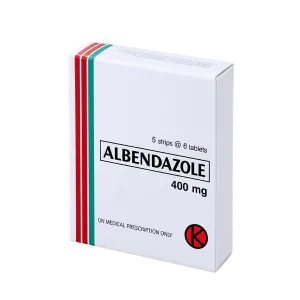
| Albendazole | Human and veterinary treatment of selected parasitic infections | Human-authorised uses exist for defined indications |
Mebendazole and albendazole have documented human applications for specific parasitic diseases. Their use still depends on diagnosis, age, pregnancy status, liver function and local prescribing information. Their human approvals do not transfer to fenbendazole.
The three substances should not be substituted on a milligram-for-milligram basis. Absorption, metabolism and tissue exposure can differ considerably, even when the compounds belong to the same broad chemical family.
Common mistakes
Several mistakes can turn uncertainty into avoidable risk:
- Assuming a veterinary anthelmintic has the same status as a human benzimidazole
- Using internet dosing schedules instead of an individually assessed plan
- Combining fenbendazole with cancer treatment without telling the oncology team
- Repeating a course because symptoms have not improved
- Treating fatigue, diarrhoea or weight loss as proof of parasites
- Ignoring jaundice or dark urine because the medicine was described as an animal dewormer
- Treating a capsule strength as a human dose
- Stopping prescribed cancer treatment after reading preclinical research
- Using alcohol during a period of suspected liver injury
- Giving human medicines to animals, or veterinary medicines to people, without species-specific professional direction
One subtle error is assuming that “natural” or “repurposed” means low risk. Fenbendazole is a pharmacologically active benzimidazole compound. Its activity against parasite tubulin does not predict harmlessness in human liver cells.
What doctors say
Veterinary clinicians generally use fenbendazole as one component of parasite management, not as a universal treatment for every gastrointestinal symptom. They may combine faecal testing with weight assessment, exposure history and evaluation of treatment response.
A human physician would view self-directed fenbendazole use as a medication-safety issue. The key concerns are uncertain exposure, possible liver injury and interference with established treatment. A doctor would also want to know the capsule strength, number of doses, timing, other medicines and any symptoms that developed afterwards.
Cancer specialists separate supportive care from anticancer treatment. A laboratory mechanism can justify further research, but it does not justify replacing a therapy supported by human clinical trials. The European Medicines Agency applies this evidence standard when assessing medicines for human disease.
Questions and answers
Can Fenbendazole be combined with cancer medicines or supplements?
Fenbendazole should not be combined with cancer medicines or supplements on a self-directed basis. The MHRA’s medicine-safety principles require clinicians to consider the full treatment list when liver injury or interactions are possible, and the concern remains relevant in 2026. Chemotherapy, immunotherapy, targeted medicines, anticoagulants and concentrated herbal products may create clinically significant uncertainty when taken with an unvalidated veterinary compound. A person who has taken both should provide the oncology team with the names, doses and dates rather than stopping prescribed treatment independently.
Can Fenbendazole capsules be split, crushed or chewed?
Capsules should not be split, crushed or chewed unless a veterinary or medical professional has confirmed that the specific formulation permits it. Capsule contents may irritate the mouth or expose the user to powder, while opening the capsule can alter how the dose is handled. The FDA’s 2022 veterinary product information treats dosage form and administration instructions as formulation-specific rather than interchangeable across products . There is no established human instruction that makes capsule manipulation appropriate for cancer treatment.
Storage should follow the product’s authorised handling instructions, with the capsules kept dry, protected from excessive heat and secured away from children and animals that are not intended recipients. During travel, retain the product in its labelled container and avoid leaving it in a hot car, near a radiator or in a damp bathroom. The WHO’s 2022 medication-safety framework emphasises clear identification and controlled storage when medicines are transported. Travelling with fenbendazole does not change its veterinary status or create a human indication.
What is the best time of day to take Fenbendazole?
There is no validated human time of day for taking fenbendazole. Veterinary schedules can differ according to animal species, formulation, parasite and feeding instructions, so an animal regimen should come from the responsible veterinary clinician. The EMA’s 2024 veterinary-medicine principles require administration instructions to match the authorised product and species rather than being generalised to people. Taking a capsule at breakfast or bedtime does not make an unvalidated human regimen safer.
Which condition rules Fenbendazole out completely?
Active liver disease or unexplained jaundice is a clear reason to avoid self-administration and seek medical assessment. Acute hepatitis has been reported in connection with unsupervised human use, and liver symptoms can progress before a person feels seriously unwell. The MHRA’s 2024 adverse-reaction approach supports prompt evaluation of suspected drug-induced liver injury. Pregnancy, breastfeeding and concurrent cancer treatment are additional situations requiring direct clinical review before any exposure.
What happens after stopping Fenbendazole, and is tapering needed?
Fenbendazole is not a medicine for which a routine human tapering schedule has been established. Stopping it does not provide evidence that a cancer or infection has been treated, and continuing it to avoid withdrawal is not supported by a validated human protocol. The WHO’s 2022 medication-safety guidance favours documenting exposure and monitoring symptoms when an unapproved or unfamiliar medicine has been used. Anyone with jaundice, persistent vomiting or worsening illness after stopping needs medical evaluation rather than a restart.
How soon might an effect become noticeable?
A reliable human timeframe for benefit has not been established. Parasite-treatment response in animals depends on the parasite, species, burden and diagnostic accuracy, while laboratory anticancer effects cannot be converted into a predictable human onset time. The EMA’s 2024 assessment framework separates preclinical observations from clinical evidence when evaluating medicines. New symptoms after taking fenbendazole should be treated as possible adverse effects or signs of the underlying illness, not assumed to indicate therapeutic activity.
Do you offer anonymous delivery?
Your order will be securely packed and shipped within 24 hours. This is exactly what your package will look like (images of an actual item sent). It has the size and look of a regular private letter (24x11x0.7 cm) and its contents cannot be seen.
Comparison
Albendazole
Fenbendazole Current
Fenbendazole: What Customers Say
I used capsules for several days without checking for interactions. Nausea and dark urine followed, and hospital tests showed liver abnormalities. The symptoms improved after medical review and stopping the product.
I expected a quick effect because online discussions described it as a dewormer. My symptoms were actually caused by another condition, and repeating an anthelmintic would not have addressed it.
I asked my oncology team before making any change. They explained that laboratory findings involving fenbendazole were not proof of benefit in people, so I continued the treatment supported by my clinical plan.
The main problem was confusion about veterinary and human medicines. I had several regular prescriptions, so the interaction and liver questions were more important than the proposed mechanism.
Sources
- U.S. Food and Drug Administration, Center for Veterinary Medicine (2022). Animal drug label — fenbendazole
- PubMed (2021). Indexed reports on fenbendazole exposure and liver injury