The burning eased after a few days and the urine test improved. I had trouble sleeping during the first week, so I changed the dose timing after discussing it with the prescriber.
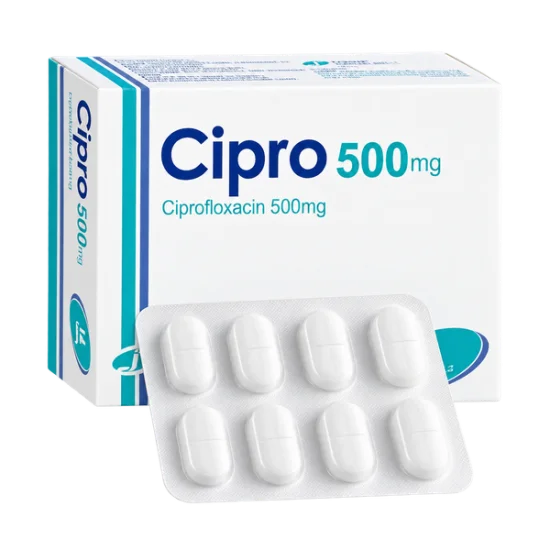
Cipro is an oral product containing ciprofloxacin, a fluoroquinolone antibiotic. It is for selected bacterial infections when the organism is susceptible and ciprofloxacin is clinically appropriate; it kills susceptible bacteria. Dosing differs between strengths and users, so no single amount suits everyone.
About this product
Cipro contains ciprofloxacin, a fluoroquinolone antibiotic. Its antibacterial action is bactericidal, meaning it kills susceptible bacteria rather than merely slowing their growth. Ciprofloxacin is used when the suspected or confirmed organism is sensitive to it and when its risk profile is appropriate for the infection.
Uses
Cipro is used for selected bacterial infections. The indication depends on the infection site, bacterial susceptibility, severity, kidney function, and available alternatives. The MHRA advises restricting systemic fluoroquinolones to situations where other commonly recommended antibiotics are unsuitable because of the risk of long-lasting and disabling reactions [2].
Urinary and prostatic infections
Ciprofloxacin may be prescribed for complicated urinary tract infections, acute pyelonephritis, and chronic bacterial prostatitis when the causative organism is susceptible. It can reach urinary concentrations that support treatment of susceptible urinary pathogens.
Prostatitis requires careful assessment because bacteria may persist within prostatic tissue. Symptoms can include pelvic pain, painful urination, urinary frequency, fever, or difficulty passing urine. A longer course may be needed for chronic bacterial prostatitis than for a straightforward lower urinary infection.
Cystitis caused by a resistant organism may require a different antibiotic. Ciprofloxacin should not be selected solely because urinary symptoms are uncomfortable.
Respiratory infections
Ciprofloxacin can be active against selected Gram-negative respiratory pathogens, including some Pseudomonas strains. It is not a routine choice for ordinary community-acquired pneumonia because its activity against important respiratory Gram-positive organisms is limited.
Bronchitis is commonly viral and does not automatically require an antibiotic. Pneumonia requires clinical assessment, and treatment depends on severity, likely pathogen, local guidance, and test results.
Bone, joint, gastrointestinal, and systemic infections
Ciprofloxacin may form part of treatment for selected bone and joint infections, infectious diarrhoea, abdominal infections, or bloodstream infections when the organism is susceptible. These uses require a clear bacterial diagnosis or a strong clinical rationale.
Ciprofloxacin is also an established option for certain anthrax exposures or infections under specialist and public-health direction. This does not mean it is suitable for unexplained fever or an unconfirmed infection.
The FDA prescribing information lists several infection-specific uses while stressing that cultures and susceptibility testing should guide treatment where possible [3].

Pharmacological action
Ciprofloxacin blocks two bacterial enzymes called DNA gyrase and topoisomerase IV. These enzymes manage the tightly coiled bacterial DNA during replication and repair. When the enzymes are inhibited, bacterial DNA develops lethal breaks, so the organism cannot reproduce or maintain its essential cellular functions [1].
Human cells use different DNA-handling enzymes. This difference gives ciprofloxacin selective antibacterial activity, although it does not remove the possibility of adverse effects.
When not to use it
Cipro is not suitable for everyone. It should not be used with tizanidine, and it requires careful clinical review in people with specific risk factors.
- Serious allergic reaction to ciprofloxacin or another quinolone.
- Concomitant use of tizanidine.
- Previous tendon inflammation or tendon rupture linked to a fluoroquinolone.
- Known susceptibility to severe fluoroquinolone-related neurological or psychiatric reactions.
- Myasthenia gravis.
- Significant kidney impairment unless the dose has been specifically adjusted.
- History of abnormal heart rhythm or important QT prolongation.
- Pregnancy or breastfeeding unless a clinician has determined that treatment benefits outweigh the potential risks.
When this is not for you
Cipro is not for you if
- You have had a serious allergic reaction to ciprofloxacin or another quinolone.
- You are taking tizanidine.
- You previously developed tendon inflammation or tendon rupture linked to a fluoroquinolone.
- You have a known susceptibility to severe fluoroquinolone-related neurological or psychiatric reactions.
- A clinician has identified a bacterial infection for which ciprofloxacin is unlikely to work.
- You have myasthenia gravis, where fluoroquinolones may worsen muscle weakness.
- You have significant kidney impairment unless the dose has been specifically adjusted.
- You have a history of abnormal heart rhythm or important QT prolongation.
- You are pregnant or breastfeeding unless a clinician has determined that treatment benefits outweigh the potential risks.
Children and adolescents generally require specialist justification because fluoroquinolones can affect developing joints and tendons. People with aortic aneurysm risk factors, uncontrolled epilepsy, diabetes, or previous serious mental-health reactions also need an individual assessment.
Adverse reactions
Common reactions include nausea, diarrhoea, abdominal discomfort, headache, dizziness, and sleep disturbance. Mild gastrointestinal symptoms may improve during treatment, but severe or persistent diarrhoea can indicate antibiotic-associated colitis.
Fluoroquinolone reactions can appear during treatment or after the final dose. The EMA review describes the possibility of prolonged or irreversible effects involving tendons, muscles, joints, nerves, and mental health [4].
Stop ciprofloxacin and obtain urgent medical advice if any of these occur:
- Pain, swelling, or weakness in a tendon, especially the Achilles tendon.
- Numbness, burning, tingling, or weakness in an arm or leg.
- Severe anxiety, agitation, confusion, hallucinations, or suicidal thoughts.
- Fainting, a very fast heartbeat, or an irregular heartbeat.
- Severe watery or bloody diarrhoea.
- Facial swelling, breathing difficulty, or widespread blistering rash.
- Sudden severe pain in the chest, abdomen, or back.
Tendon injury deserves special attention. The risk is higher in older adults, people with kidney disease, transplant recipients, and those using corticosteroids. Tendon rupture can happen weeks after treatment ends.
Some patients notice vivid dreams, restlessness, or a metallic taste. These symptoms may be mild, but new neurological or psychological symptoms deserve prompt assessment because early action can prevent progression.
What it contains
Cipro is supplied as oral pills containing ciprofloxacin. Dosing differs between strengths and between users, so there is no single amount that suits everyone. The active ingredient belongs to the fluoroquinolone class.
| Product feature | Clinical meaning | Practical point |
|---|---|---|
| Ciprofloxacin | Antibacterial active ingredient | Works only against susceptible bacteria |
| Tablet strength | Oral treatment strength | The prescribed frequency depends on the infection and patient factors |
| Tablet form | Swallowed by mouth | Take with water and separate from mineral products |
Dosage and administration
The tablet strength is intended for oral treatment. Dosing differs between strengths and between users, so there is no single amount that suits everyone. The prescribed amount and treatment length vary according to the infection, kidney function, bacterial sensitivity, age, and other medicines being taken.
Ciprofloxacin tablets should be swallowed whole unless a prescriber gives different instructions. Crushing or chewing can make administration unpleasant and may interfere with correct dosing.
There is no single amount that suits every person. Ciprofloxacin dosing differs between infections, kidney function, age, bacterial susceptibility, and the strength selected by the prescriber.
The usual administration principles are:
- Take the prescribed tablet by mouth with water.
- Follow the prescribed frequency and course length.
- Take doses at evenly spaced times when possible.
- Swallow the tablet whole unless specific instructions say otherwise.
- Avoid taking it at the same time as antacids or mineral supplements.
- Complete the prescribed course unless a clinician stops it because of an adverse reaction.
- If a dose is missed, take it when remembered unless the next dose is due soon; do not double the next dose.
A large amount of water can help reduce concentrated urine and supports hydration during treatment. Ciprofloxacin does not replace drainage, surgery, or other treatment when an infection has an obstructed or deep source.
Sun sensitivity can occur. Patients who develop unusual skin sensitivity should limit intense sunlight and seek advice about the reaction.
Comparison
Cipro is a single-ingredient oral fluoroquinolone antibiotic that kills susceptible bacteria, unlike topical treatments that act mainly at the application site.
Common mistakes
Several practical errors can reduce ciprofloxacin absorption or increase adverse-effect risk:
- Taking the tablet with a calcium-fortified drink.
- Swallowing it together with an iron, magnesium, zinc, or calcium supplement.
- Stopping after symptoms improve without confirming the planned course.
- Continuing intense running after tendon pain begins.
- Ignoring new numbness, burning, weakness, or unusual mental symptoms.
- Taking a missed dose together with the next dose.
- Using leftover tablets for a new infection.
- Assuming every episode of cystitis needs the same antibiotic.
- Failing to mention clozapine, tizanidine, warfarin, or corticosteroid treatment.
- Treating antibiotic-associated diarrhoea with self-selected anti-diarrhoeal medicine when blood, fever, or severe pain is present.
A urine culture can be useful when infection recurs, symptoms are severe, treatment fails, or resistance is suspected. Ciprofloxacin should not be shared with another person because dose selection and safety depend on individual factors.
What doctors say
In clinical practice, doctors use ciprofloxacin selectively rather than as a default antibiotic. The decision usually combines the infection site, culture result, resistance risk, kidney function, allergies, previous antibiotic exposure, and interaction profile.
A prescriber may choose ciprofloxacin when a susceptible Gram-negative organism is identified and other suitable options are unavailable, unsuitable, or less appropriate. A doctor may choose a different antibiotic for uncomplicated cystitis, ordinary bronchitis, or routine community-acquired pneumonia.
Treatment success is not judged only by whether fever falls after one tablet. Pain, urinary function, fever pattern, blood tests, culture results, and the original source of infection all matter.
Pregnancy, breastfeeding, tendon disease, aortic disease, epilepsy, diabetes, kidney disease, and psychiatric history should be discussed before treatment. The prescribing clinician also needs to know about corticosteroids, anticoagulants, clozapine, theophylline, and mineral supplements.
Questions and answers
How long does one Cipro dose keep working?
Ciprofloxacin is absorbed after an oral dose and continues exerting antibacterial pressure as drug levels and tissue exposure change over the dosing interval. The exact interval depends on kidney function, the prescribed schedule, and the infection being treated. FDA prescribing information (2024) describes ciprofloxacin dosing by indication rather than as a universal single-dose treatment. A single tablet should not be treated as a complete course unless a prescriber has specifically prescribed that regimen. The prescribed schedule should still be followed when symptoms improve.
Can Cipro cause tendon pain?
Yes. Tendon inflammation and tendon rupture are recognised fluoroquinolone risks, and the Achilles tendon is a common site. The MHRA safety communication published in 2019 advises stopping treatment and seeking medical advice when tendon pain or swelling develops. Risk increases with age, corticosteroid use, kidney disease, and transplant history, although younger people can also be affected.
What should be discussed with a doctor before starting Cipro?
Tell the prescriber about previous quinolone reactions, tendon problems, kidney disease, epilepsy, heart-rhythm disorders, diabetes, pregnancy, breastfeeding, and myasthenia gravis. Provide the full medicine list, including clozapine, tizanidine, warfarin, corticosteroids, theophylline, antacids, and mineral supplements. The EMA fluoroquinolone review published in 2019 supports careful selection when serious risk factors are present.
What is the best time of day to take Cipro?
There is no universal best clock time; the most useful schedule is the one that keeps prescribed doses evenly spaced. Take the tablet with water and separate it from calcium, magnesium, aluminium, iron, and zinc products. NHS antibiotic guidance (2024) describes the importance of following the prescribed schedule and completing treatment as directed. Avoid taking it alongside milk or yoghurt because calcium can interfere with absorption.
How long does a Cipro course last, and is long-term use acceptable?
Course length depends on the infection, response, bacterial susceptibility, and kidney function. Longer treatment may be used for conditions such as chronic bacterial prostatitis, while other infections need a shorter course. NICE antimicrobial stewardship guidance (2015) supports using the shortest suitable course and reviewing treatment when results are available. Long-term or repeated use requires a clear clinical reason because cumulative exposure increases the opportunity for serious adverse effects and antibiotic resistance.
Do you offer anonymous delivery?
Your order will be securely packed and shipped within 24 hours. This is exactly what your package will look like (images of an actual item sent). It has the size and look of a regular private letter (24x11x0.7 cm) and its contents cannot be seen.
Comparison
Amoxil
Ampicillin
Augmentin
Bactrim
Ciplox
Cipro: What Customers Say
The tablets were easy to swallow and my fever settled. Diarrhoea started near the end of the course, and I needed medical advice because it continued after treatment.
The pelvic discomfort improved gradually rather than overnight. I finished the course, but the treatment felt long and I noticed mild dizziness when standing up.
Cipro helped the infection, but I developed pain near my Achilles tendon. I stopped exercise and contacted the clinic quickly, which was reassuring.
My symptoms improved within several days, although the tablets upset my stomach when I took them without enough water. Spacing them from my mineral supplement made the routine easier.
Sources
- U.S. Food and Drug Administration (2024). CIPRO (ciprofloxacin hydrochloride) tablets prescribing information.
- Medicines and Healthcare products Regulatory Agency (2019). Fluoroquinolone antibiotics: must now only be prescribed when other commonly recommended antibiotics are inappropriate.
- World Health Organization (2023). The WHO AWaRe antibiotic book: Antibiotic treatment recommendations for common infections.
- European Medicines Agency (2019). Quinolone- and fluoroquinolone-containing medicinal products: referral procedure.