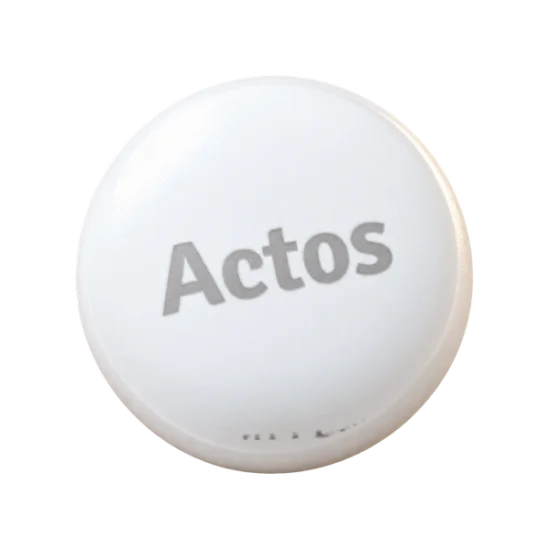
Sheffield, took Actos at his prescribed dose as part of a type 2 diabetes treatment plan for several months. His glucose readings became more consistent after the early weeks, but he noticed ankle swelling and needed a review of the wider regimen. He found that the medicine itself did not cause drowsiness.
Pioglitazone, the active ingredient of Actos, belongs to the thiazolidinedione class for adults with type 2 diabetes. It improves insulin sensitivity in muscle and adipose tissue, helping the body regulate elevated blood glucose alongside diet and physical activity.
About this product
Actos contains pioglitazone, an oral antidiabetic medicine used to improve glycaemic control in adults with type 2 diabetes mellitus. It is supplied as tablets and may be prescribed alone or with other glucose-lowering treatments when insulin resistance contributes to poor blood glucose control.
Pioglitazone does not force the pancreas to release insulin immediately. Instead, it changes how responsive the body’s tissues are to insulin.
Uses
Actos is used to improve glycaemic control in adults with type 2 diabetes mellitus when insulin resistance contributes to poor blood glucose control. It may be prescribed alone or with other glucose-lowering treatments, alongside diet and physical activity.
Pharmacological action
Pioglitazone improves the responsiveness of muscle and adipose tissue to insulin. This increased insulin sensitivity helps glucose move from the bloodstream into tissues, supporting better regulation of elevated blood glucose. It does not immediately force the pancreas to release insulin.
When not to use it
- Current or previous heart failure, where pioglitazone could worsen fluid retention.
- Significant liver disease or raised liver enzymes requiring investigation.
- Diabetic ketoacidosis or another acute metabolic emergency.
- Known allergy to pioglitazone or any tablet component.
- Active bladder cancer or a history requiring specialist assessment.
- Unexplained blood in the urine until the cause has been investigated.
When this is not for you
NOT for you if you have heart failure, significant liver disease, active bladder cancer, or unexplained blood in the urine.
Adverse reactions
Common or clinically relevant adverse effects associated with pioglitazone include weight gain, oedema, headache, visual changes and low blood glucose when it is combined with insulin or insulin-releasing medicines. Weight gain may reflect both increased fat storage and fluid retention, so the pattern and speed of change matter.
Some patients tolerate pioglitazone without troublesome symptoms. Others notice ankle swelling or increased appetite before seeing an improvement in glucose results. The treatment benefit should be assessed through HbA1c and glucose monitoring, not by how the tablets feel on a particular day.
Serious problems requiring prompt medical assessment include:
- New or worsening breathlessness.
- Rapid weight gain with swelling.
- Yellowing of the skin or eyes, dark urine or persistent upper abdominal discomfort.
- Blood in the urine, painful urination or urinary urgency.
- Sudden changes in vision or visual distortion.
- Severe allergic swelling, breathing difficulty or widespread rash.
Pioglitazone has been associated with macular oedema, a condition affecting the retina, and with urinary bladder tumours in safety evaluations. The EMA product information describes these risks and the need for appropriate patient selection [1].
What it contains
Actos contains pioglitazone, an oral antidiabetic medicine used to improve glycaemic control in adults with type 2 diabetes mellitus. It is supplied as tablets and may be prescribed alone or with other glucose-lowering treatments when insulin resistance contributes to poor blood glucose control.
Pioglitazone does not force the pancreas to release insulin immediately. Instead, it changes how responsive the body’s tissues are to insulin. This distinction explains why its effect develops progressively rather than producing a rapid fall in blood glucose after one tablet.
The tablet strength and prescribed regimen depend on the person’s blood glucose results, liver function, kidney status, other medicines and risk of fluid retention. There is no single dose that suits every patient.
Active ingredient and formulation
The pharmacologically active substance is pioglitazone. It is a thiazolidinedione, also called a PPAR-γ agonist.
Actos tablets are taken by mouth. The prescribed strength should be followed exactly, with dose selection made according to the individual treatment plan. Pioglitazone may be used as monotherapy or as part of combination treatment with medicines such as metformin, sulfonylureas or insulin.
Dosage and administration
Actos tablets are taken orally according to the prescribed strength and schedule. Pioglitazone is generally administered once daily, and it can be taken with or without food. Treatment may be used alone or alongside another antidiabetic medicine.
- Take the tablet at the same time each day.
- Swallow it with water.
- Do not change the prescribed strength without medical direction.
- If a dose is missed, take it when remembered unless the next scheduled dose is near.
- Do not take two doses together to compensate for a missed tablet.
- Continue glucose monitoring as directed during treatment changes.
A missed dose is usually handled by returning to the normal schedule. Taking an extra tablet can increase the risk of adverse effects without providing a reliable correction of blood glucose.
Pioglitazone is not an emergency treatment for diabetic ketoacidosis or severely elevated glucose with acute symptoms. Symptoms such as vomiting, deep or rapid breathing, marked dehydration or confusion require urgent medical assessment rather than an additional tablet.
Comparison
Treatment choices for type 2 diabetes depend on HbA1c, cardiovascular disease, heart failure, kidney function, weight, hypoglycaemia risk and personal tolerability. Pioglitazone is one mechanism within a broader treatment plan.
| Treatment approach | Main metabolic action | Main limitation |
|---|---|---|
| Pioglitazone | Improves insulin sensitivity through PPAR-γ activation | Fluid retention, weight gain and delayed onset of benefit |
| Metformin-based therapy | Reduces hepatic glucose production and improves insulin handling | Gastrointestinal effects and suitability limits in significant renal impairment |
| Insulin therapy | Replaces or supplements insulin directly | Hypoglycaemia, injection requirements and weight gain |
Pioglitazone may be considered when insulin resistance is a major feature and fluid retention risk is acceptable. Metformin is commonly used when suitable, while insulin is required when endogenous insulin production is insufficient or glucose levels remain markedly uncontrolled.
This is a clinical choice rather than a simple ranking. A medicine that fits one patient’s metabolic profile may be unsuitable for another because of heart failure, liver disease, fracture risk or recurrent hypoglycaemia.
Common mistakes
Several practical errors can make treatment appear less useful or increase its risks:
- Expecting pioglitazone to lower glucose immediately after one tablet.
- Taking an extra dose after a high glucose reading.
- Ignoring ankle swelling because it is painless.
- Treating rapid weight gain as a normal sign of improved appetite.
- Starting gemfibrozil, rifampicin, ketoconazole or another interacting medicine without mentioning Actos.
- Stopping treatment as soon as glucose readings improve.
- Missing HbA1c or liver-function monitoring.
- Assuming that absence of low glucose symptoms means blood glucose is controlled.
- Continuing treatment despite new breathlessness when insulin is also being used.
- Forgetting to report blurred vision or visual distortion.
One detail is easy to miss: pioglitazone can restore ovulation in some women who previously had irregular cycles. Contraception and pregnancy planning may therefore need review.
Another practical point concerns workplace testing and concentration. Pioglitazone does not usually cause sedation, but hypoglycaemia from combination treatment can impair attention and reaction time.
What doctors say
In clinical practice, doctors usually judge pioglitazone by the change in HbA1c over time rather than by an immediate symptom response. A patient who expects rapid improvement may stop too early, while a patient who develops swelling may wait too long before reporting it.
The main advantage is a direct improvement in insulin sensitivity without stimulating insulin release in the same way as a sulfonylurea. The main trade-off is the possibility of weight gain and fluid retention. Doctors also weigh fracture risk, bladder symptoms, liver health and cardiovascular status before continuing treatment.
A prescriber may use pioglitazone as part of a combination regimen when one medicine does not provide adequate glycaemic control. The treatment plan can change when HbA1c, body weight, kidney function, liver tests or cardiovascular symptoms change. Monitoring remains part of that decision. New symptoms can change the balance between benefit and risk. A review is needed when treatment goals or safety concerns change.
The WHO describes type 2 diabetes management as a combination of glucose-lowering treatment, dietary measures, physical activity and monitoring rather than reliance on one tablet alone [2].
Questions and answers
Can Actos be taken with cholesterol medicines or other medicines?
Gemfibrozil can increase pioglitazone exposure through CYP2C8 inhibition, while rifampicin can reduce exposure through enzyme induction. Ketoconazole may also raise pioglitazone levels. The EMA product information from 2024 identifies these interaction pathways and supports clinical monitoring when such medicines are combined.
How long does an Actos course last, and is long-term use acceptable?
Actos is generally used as an ongoing treatment for type 2 diabetes rather than as a short course. The suitable duration depends on HbA1c response, adverse effects, liver health, cardiovascular status and the wider diabetes plan. NICE treatment principles reviewed in 2025 support regular reassessment of glucose-lowering therapy rather than automatic continuation without monitoring.
What happens after stopping Actos, and does it need tapering?
Stopping pioglitazone can allow insulin resistance and blood glucose levels to worsen again, especially when no replacement treatment is introduced. A taper is not usually required solely because of withdrawal symptoms, but abrupt cessation should still be discussed because another diabetes plan may be needed. The MHRA patient-safety approach, updated in 2024, centres on maintaining glucose control and reviewing treatment changes promptly.
Which diet, exercise and daily habits support the result?
Regular physical activity, balanced meals with controlled carbohydrate portions and weight management can support the insulin-sensitising effect of pioglitazone. Excess alcohol can make diabetes control and liver assessment more difficult. WHO guidance published in 2023 describes diet and physical activity as core parts of type 2 diabetes care alongside prescribed treatment.
Can Actos affect driving, concentration or machinery work?
Pioglitazone alone does not commonly impair alertness, but hypoglycaemia can occur when it is combined with insulin or a sulfonylurea. Sweating, shaking, blurred vision, dizziness or confusion can make driving and machinery work unsafe. Current MHRA guidance from 2024 advises attention to hypoglycaemia risk when diabetes medicines are used in combination.
Can alcohol be used while taking Actos?
Alcohol may worsen blood glucose instability and can complicate assessment of liver-related symptoms. This concern is greater in people with liver disease or those taking several medicines that affect glucose control. The EMA product information from 2024 supports caution when hepatic symptoms or abnormal liver tests occur during pioglitazone treatment.
Do you offer anonymous delivery?
Your order will be securely packed and shipped within 24 hours. This is exactly what your package will look like (images of an actual item sent). It has the size and look of a regular private letter (24x11x0.7 cm) and its contents cannot be seen.
Comparison
Actos Current
Amaryl
Empagliflozin
Forxiga
Glucophage
Actos: What Customers Say
Oxford, used pioglitazone at his prescribed dose alongside another diabetes treatment for several months. After the first month, he felt no obvious difference, which made him question whether it was working. Later HbA1c testing showed improvement, although gradual weight gain remained a concern.
Cambridge, had taken Actos with insulin at his prescribed dose for several months and developed increasing breathlessness with swollen ankles. He stopped treating the symptoms as ordinary weight gain and obtained a prompt clinical assessment. His experience showed why fluid retention should be reported early during combination therapy.
Sources
- European Medicines Agency (2024). Summary of Product Characteristics (SmPC) — pioglitazone
- World Health Organization (2023). Diabetes